Erection problems and Blood potassium decreased
Summary:
Blood potassium decreased is found among people with Erection problems, especially for people who are 60+ old.
The study analyzes which people have Blood potassium decreased with Erection problems. It is created by eHealthMe based on reports of 23 people who have Erection problems from the Food and Drug Administration (FDA), and is updated regularly. You can use the study as a second opinion to make health care decisions.
What is Erection problems?
Erection problems is found to be associated with 1,271 drugs and 2,034 conditions by eHealthMe. Check the latest studies of Erection problems.
What is Blood potassium decreased?
Blood potassium decreased is found to be associated with 1,631 drugs and 1,724 conditions by eHealthMe. Check the latest studies of Blood potassium decreased.
23 people who have Erection Problems and Blood Potassium Decreased are studied.
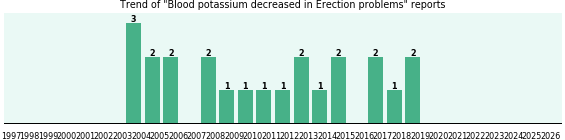
Age of people who have Erection Problems and experienced Blood Potassium Decreased *:
- 0-1: 0.0 %
- 2-9: 0.0 %
- 10-19: 0.0 %
- 20-29: 10 %
- 30-39: 5 %
- 40-49: 30 %
- 50-59: 5 %
- 60+: 50 %
Common co-existing conditions for these people *:
- Gastroesophageal Reflux Disease (a condition in which stomach contents leak backward from the stomach into the oesophagus): 4 people, 17.39%
- High Blood Cholesterol: 4 people, 17.39%
- High Blood Pressure: 3 people, 13.04%
- Blood Pressure Abnormal: 2 people, 8.70%
- Gastric Ulcer (stomach ulcer): 2 people, 8.70%
- Hypotension (abnormally low blood pressure): 2 people, 8.70%
- Mood Swings (an extreme or rapid change in mood): 2 people, 8.70%
- Multiple Myeloma (cancer of the plasma cells): 2 people, 8.70%
- Neuropathy Peripheral (surface nerve damage): 2 people, 8.70%
- Rickets (softening of bones): 2 people, 8.70%
Common drugs taken by these people *:
- Viagra: 12 people, 52.17%
- Prilosec: 5 people, 21.74%
- Levitra: 4 people, 17.39%
- Cialis: 4 people, 17.39%
- Lyrica: 4 people, 17.39%
- Klor-Con: 3 people, 13.04%
- Furosemide: 3 people, 13.04%
- Neurontin: 3 people, 13.04%
- Omeprazole: 2 people, 8.70%
- Questran: 2 people, 8.70%
Common symptoms for these people *:
- Fainting (loss of consciousness and postural tone): 5 people, 21.74%
- Red Blood Cell Count Decreased: 5 people, 21.74%
- Electrocardiogram T Wave Inversion: 4 people, 17.39%
- Haemoglobin Decreased: 4 people, 17.39%
- Haematocrit Decreased: 4 people, 17.39%
- Gastroesophageal Reflux Disease (a condition in which stomach contents leak backward from the stomach into the oesophagus): 4 people, 17.39%
- Respiratory Rate Increased (excess breathing rate/min): 4 people, 17.39%
- Heart Palpitations (feelings or sensations that your heart is pounding or racing): 4 people, 17.39%
- Drug Ineffective: 4 people, 17.39%
- Bradycardia (abnormally slow heart action): 4 people, 17.39%
* Approximation only. Some reports may have incomplete information.
Do you take medications and have Blood potassium decreased?
- Check whether Blood potassium decreased is associated with a drug or a conditionRelated studies:
Treatments, associated drugs and conditions:
- Erection problems (80,352 reports)
- Blood potassium decreased (41,497 reports)
All the drugs that are associated with Blood potassium decreased:
- Blood potassium decreased (1,631 drugs)
All the conditions that are associated with Blood potassium decreased:
- Blood potassium decreased (1,724 conditions)
How the study uses the data?
How to use the study?
DO NOT STOP MEDICATIONS without first consulting your doctor. If there are any serious or long term adverse effects discovered in the study, discuss the study with your doctor to ensure that proper medication management will be in place if applicable.
The study is based on Blood potassium decreased and Erection problems, and their synonyms.
Who is eHealthMe?
With medical big data and proven AI/ML algorithms, eHealthMe provides a platform for everyone to run phase IV clinical trials. We study millions of patients and 5,000 more each day. Results of our real-world drug study have been referenced on 800+ peer-reviewed medical publications, including The Lancet, Mayo Clinic Proceedings, and Nature. Our analysis results are available to researchers, health care professionals, patients (testimonials), and software developers (open API).
WARNING, DISCLAIMER, USE FOR PUBLICATION
WARNING: Please DO NOT STOP MEDICATIONS without first consulting a physician since doing so could be hazardous to your health.
DISCLAIMER: All material available on eHealthMe.com is for informational purposes only, and is not a substitute for medical advice, diagnosis, or treatment provided by a qualified healthcare provider. All information is observation-only. Our phase IV clinical studies alone cannot establish cause-effect relationship. Different individuals may respond to medication in different ways. Every effort has been made to ensure that all information is accurate, up-to-date, and complete, but no guarantee is made to that effect. The use of the eHealthMe site and its content is at your own risk.
If you use this eHealthMe study on publication, please acknowledge it with a citation: study title, URL, accessed date.
Recent studies on eHealthMe:
- Could Losartan Potassium cause Breath Sounds Abnormal? - 6 seconds ago
- Could Nexplanon cause Vaginal Bleeding Between Periods? - 18 seconds ago
- Drug interactions of Alclometasone Dipropionate and Tacrolimus - 28 seconds ago
- Could Losartan Potassium cause Muscle Aches? - 37 seconds ago
- Drug interactions of Sustiva and Zolpidem Tartrate - 40 seconds ago
- Dementia Alzheimer'S Type and Pulmonary Embolism - 48 seconds ago
- Drug interactions of Losartan Potassium And Hydrochlorothiazide and Digoxin - 53 seconds ago
- Could Suboxone cause Chronic Kidney Disease? - 58 seconds ago
- Drug interactions of Ceftriaxone and Simvastatin - a minute ago
- How effective is Mucinex for Cough? - a minute ago