Anusol hc and Acyclovir drug interactions - a phase IV clinical study of FDA data
Summary:
Drug interactions are reported among people who take Anusol hc (hydrocortisone) and Acyclovir (acyclovir). Common drug interactions include erythema among females and drug ineffective among males.
The phase IV clinical study analyzes what interactions people have when they take Anusol hc and Acyclovir. It is created by eHealthMe based on reports of 11 people who take the same drugs from the FDA, and is updated regularly.
What is Anusol hc?
Anusol hc has active ingredients of hydrocortisone. It is often used in hemorrhoids. eHealthMe is studying from 679 Anusol hc users. Check the latest studies of Anusol hc.
What is Acyclovir?
Acyclovir has active ingredients of acyclovir. It is often used in herpes simplex. eHealthMe is studying from 54,961 Acyclovir users. Check the latest studies of Acyclovir.
11 people who take Anusol hc and Acyclovir together, and have interactions are studied.
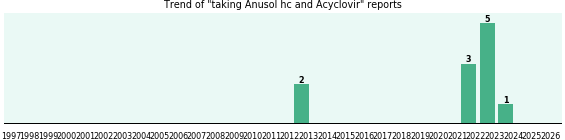
What are the common drug interactions of Anusol Hc and Acyclovir, by gender? *:
female:
- Erythema (redness of the skin)
- Leukocytosis (increased white blood cells)
- Neurotoxicity (when the exposure to natural or artificial toxic substances, which are called neurotoxins, alters the normal activity of the nervous system)
- Peritonitis (inflammation of the peritoneum, the thin tissue that lines the inner wall of the abdomen and covers most of the abdominal organs)
- Scab (a hard coating on the skin formed during the wound healing)
- Stomatitis (inflammation of mucous membrane of mouth)
- Thrombocytopenia (decrease of platelets in blood)
- Thrombotic microangiopathy (a pathology that results in thrombosis in capillaries and arterioles, due to an endothelial injury)
- Clostridium difficile colitis (inflammation of colon by clostridium difficile bacteria infection)
- Colitis ischaemic (due to infection of intestine impaired blood supply to colon)
male:
- Drug ineffective
- White blood cell count increased
- Acute myeloid leukaemia (acute cancer in which the bone marrow makes abnormal myeloblasts)
- Liver disorder (liver diseases)
- Pneumonia
- Sepsis (a severe blood infection that can lead to organ failure and death)
What are the common drug interactions of Anusol Hc and Acyclovir, by age (0-1 to 60+)? *:
0-1:
n/a
2-9:
n/a
10-19:
n/a
20-29:
n/a
30-39:
- Thrombotic microangiopathy (a pathology that results in thrombosis in capillaries and arterioles, due to an endothelial injury)
40-49:
- Neurotoxicity (when the exposure to natural or artificial toxic substances, which are called neurotoxins, alters the normal activity of the nervous system)
- Peritonitis (inflammation of the peritoneum, the thin tissue that lines the inner wall of the abdomen and covers most of the abdominal organs)
50-59:
n/a
60+:
- Clostridium difficile colitis (inflammation of colon by clostridium difficile bacteria infection)
- Colitis ischaemic (due to infection of intestine impaired blood supply to colon)
- Thrombocytopenia (decrease of platelets in blood)
- Diverticulitis (digestive disease which involves the formation of pouches (diverticula) within the bowel wall)
- Erythema (redness of the skin)
- Leukocytosis (increased white blood cells)
- Liver disorder (liver diseases)
- Pneumonia
- Scab (a hard coating on the skin formed during the wound healing)
- Sepsis (a severe blood infection that can lead to organ failure and death)
What are the existing conditions these people have? *
- Multiple Myeloma (cancer of the plasma cells): 3 people, 27.27%
- Acute Lymphocytic Leukemia (All) (cancer of the white blood cells characterized by excess lymphoblasts): 2 people, 18.18%
- Acute Myeloid Leukaemia (acute cancer in which the bone marrow makes abnormal myeloblasts): 2 people, 18.18%
- Immunodeficiency Disorders: 2 people, 18.18%
- Depression: 1 person, 9.09%
- Anaemia (lack of blood): 1 person, 9.09%
- Anaemia Of Malignant Disease: 1 person, 9.09%
- Birth Control: 1 person, 9.09%
- Constipation: 1 person, 9.09%
- Sleep Disorder: 1 person, 9.09%
* Approximation only. Some reports may have incomplete information.
Do you take Anusol hc and Acyclovir?
- Personalize this study to your gender, age, symptoms and drugs
- Predict drug outcomes for up to one year with AI
- Get an AI agent to monitor your drugs continuously
Related studies:
Effectiveness of, side effects of, and alternative drugs to the 2 drugs:
Browse all drug interactions of Anusol hc and Acyclovir:
a b c d e f g h i j k l m n o p q r s t u v w x y zSub-studies by gender and age:
Female: 0-1 2-9 10-19 20-29 30-39 40-49 50-59 60+
Male: 0-1 2-9 10-19 20-29 30-39 40-49 50-59 60+
Browse all side effects of Anusol hc:
a b c d e f g h i j k l m n o p q r s t u v w x y zBrowse all side effects of Acyclovir:
a b c d e f g h i j k l m n o p q r s t u v w x y zBrowse all interactions between Anusol hc and drugs from A to Z:
a b c d e f g h i j k l m n o p q r s t u v w x y zBrowse all interactions between Acyclovir and drugs from A to Z:
a b c d e f g h i j k l m n o p q r s t u v w x y zRelated publications that referenced our studies
- Choi N, Lee JY, Sunwoo JS, Kwon KI, Roh H, Ahn MY, Lee KB, "Hyponatremia during Acyclovir Treatment of Bell’s Palsy", Journal of the Korean Neurological Association, 2017 Aug .
- Choi N, Lee JY, Sunwoo JS, Kwon KI, Roh H, Ahn MY, Lee KB, "Hyponatremia during Acyclovir Treatment of Bell’s Palsy", Journal of the Korean Neurological Association, 2017 Aug .
How the study uses the data?
The study uses data from the FDA. It is based on hydrocortisone and acyclovir (the active ingredients of Anusol hc and Acyclovir, respectively), and Anusol hc and Acyclovir (the brand names). Other drugs that have the same active ingredients (e.g. generic drugs) are not considered. Dosage of drugs is not considered in the study.
How to use the study?
DO NOT STOP MEDICATIONS without first consulting your doctor. If there are any serious or long term adverse effects discovered in the study, discuss the study with your doctor to ensure that proper medication management will be in place if applicable.
Who is eHealthMe?
With medical big data and proven AI/ML algorithms, eHealthMe provides a platform for everyone to run phase IV clinical trials. We study millions of patients and 5,000 more each day. Results of our real-world drug study have been referenced on 800+ peer-reviewed medical publications, including The Lancet, Mayo Clinic Proceedings, and Nature. Our analysis results are available to researchers, health care professionals, patients (testimonials), and software developers (open API).
WARNING, DISCLAIMER, USE FOR PUBLICATION
WARNING: Please DO NOT STOP MEDICATIONS without first consulting a physician since doing so could be hazardous to your health.
DISCLAIMER: All material available on eHealthMe.com is for informational purposes only, and is not a substitute for medical advice, diagnosis, or treatment provided by a qualified healthcare provider. All information is observation-only. Our phase IV clinical studies alone cannot establish cause-effect relationship. Different individuals may respond to medication in different ways. Every effort has been made to ensure that all information is accurate, up-to-date, and complete, but no guarantee is made to that effect. The use of the eHealthMe site and its content is at your own risk.
If you use this eHealthMe study on publication, please acknowledge it with a citation: study title, URL, accessed date.
Recent studies on eHealthMe:
- Could Alimta cause Conjunctivitis? - 4 seconds ago
- Drug interactions of Olmesartan Medoxomil and Vincristine Sulfate - 5 seconds ago
- Could Clonazepam cause Gingival Abscess? - 11 seconds ago
- Could Sitagliptin cause Metastases To Liver? - 12 seconds ago
- Could Lasix cause Eye Inflammation? - 16 seconds ago
- Could Baycol cause Muscle Rupture? - 21 seconds ago
- Drug interactions of Truvada and Neoral - 31 seconds ago
- Could Lorazepam cause Gastroschisis? - 34 seconds ago
- Could Tracleer cause Mania? - 35 seconds ago
- Talwin vs. Nabumetone, side effect and effectiveness comparison - 35 seconds ago