Brintellix and Zopiclone drug interactions - a phase IV clinical study of FDA data
Summary:
Drug interactions are reported among people who take Brintellix (vortioxetine hydrobromide) and Zopiclone (eszopiclone). Common drug interactions include general physical health deterioration among females and dyskinesia among males.
The phase IV clinical study analyzes what interactions people have when they take Brintellix and Zopiclone. It is created by eHealthMe based on reports of 85 people who take the same drugs from the FDA, and is updated regularly.
What is Brintellix?
Brintellix has active ingredients of vortioxetine hydrobromide. It is often used in depression. eHealthMe is studying from 6,748 Brintellix users. Check the latest studies of Brintellix.
What is Zopiclone?
Zopiclone has active ingredients of eszopiclone. It is often used in insomnia. eHealthMe is studying from 54,330 Zopiclone users. Check the latest studies of Zopiclone.
85 people who take Brintellix and Zopiclone together, and have interactions are studied.
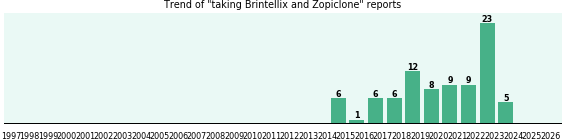
What are the common drug interactions of Brintellix and Zopiclone, by gender? *:
female:
- General physical health deterioration (weak health status)
- Hyponatraemia (abnormally low level of sodium in the blood; associated with dehydration)
- Coma (state of unconsciousness lasting more than six hours)
- Overdose
- Pancreatitis (inflammation of pancreas)
- Bradypnoea (an abnormally slow respiratory rate)
- Poisoning deliberate
- Suicidal ideation
- Fall
- Somnambulism (sleep walking)
male:
- Dyskinesia (abnormality or impairment of voluntary movement)
- Confusional state
- Hyponatraemia (abnormally low level of sodium in the blood; associated with dehydration)
- Fatigue (feeling of tiredness)
- Headache (pain in head)
- Loss of consciousness
- Respiratory acidosis (respiratory failure or ventilatory failure, causes the ph of blood and other bodily fluids to decrease)
- Suicidal ideation
- Tachycardia (a heart rate that exceeds the range of 100 beats/min)
- Aggression
What are the common drug interactions of Brintellix and Zopiclone, by age (0-1 to 60+)? *:
0-1:
n/a
2-9:
n/a
10-19:
n/a
20-29:
- Coma (state of unconsciousness lasting more than six hours)
- Bradypnoea (an abnormally slow respiratory rate)
- Overdose
- Poisoning deliberate
- Dyskinesia (abnormality or impairment of voluntary movement)
- Serotonin syndrome (occurs when two drugs that affect the body's level of serotonin are taken together at the same time)
- Tinnitus (a ringing in the ears)
30-39:
- Somnambulism (sleep walking)
- Asthenia (weakness)
- Brain injury
- Completed suicide (act of taking one's own life)
- Extrapyramidal disorder (involuntary muscle spasms in the face and neck)
- Hypoglycaemia (deficiency of glucose in the bloodstream)
- Overdose
- Pneumonia aspiration (bronchopneumonia that develops due to the entrance of foreign materials into the bronchial tree)
- Restless legs syndrome (a powerful urge to move your legs)
- Suicidal ideation
40-49:
- Confusional state
- Depressed level of consciousness
- Cognitive disorder (mental health disorders affects learning, memory, perception, and problem solving)
- Dizziness
- Muscular weakness (muscle weakness)
- Nausea (feeling of having an urge to vomit)
- Paraesthesia (sensation of tingling, tickling, prickling, pricking, or burning of a person's skin with no apparent long-term physical effect)
- Dysgeusia (disorder of the sense of taste)
- Photopsia (presence of perceived flashes of light)
- Diarrhoea
50-59:
- Hyponatraemia (abnormally low level of sodium in the blood; associated with dehydration)
- Loss of consciousness
- Respiratory acidosis (respiratory failure or ventilatory failure, causes the ph of blood and other bodily fluids to decrease)
- Suicidal ideation
- Tachycardia (a heart rate that exceeds the range of 100 beats/min)
- Diarrhoea
- Dry eye (lack of adequate tears)
- Fatigue (feeling of tiredness)
- Headache (pain in head)
- Malaise (a feeling of general discomfort or uneasiness)
60+:
- General physical health deterioration (weak health status)
- Hyponatraemia (abnormally low level of sodium in the blood; associated with dehydration)
- Suicide attempt
- Analgesic drug level increased
- Psychomotor skills impaired
- Sedation
- Bladder spasm
- Cognitive disorder (mental health disorders affects learning, memory, perception, and problem solving)
- Dermatitis allergic (inflammation of the skin due allergic reaction)
- Dizziness
What are the existing conditions these people have? *
- Stress And Anxiety: 13 people, 15.29%
- Sleep Disorder: 8 people, 9.41%
- High Blood Cholesterol: 6 people, 7.06%
- Poisoning Deliberate: 5 people, 5.88%
* Approximation only. Some reports may have incomplete information.
Do you take Brintellix and Zopiclone?
- Personalize this study to your gender, age, symptoms and drugs
- Predict drug outcomes for up to one year with AI
- Get an AI agent to monitor your drugs continuously
Related studies:
Effectiveness of, side effects of, and alternative drugs to the 2 drugs:
- Brintellix (6,748 reports)
- Zopiclone (54,330 reports)
Browse all drug interactions of Brintellix and Zopiclone:
a b c d e f g h i j k l m n o p q r s t u v w x y zSub-studies by gender and age:
Female: 0-1 2-9 10-19 20-29 30-39 40-49 50-59 60+
Male: 0-1 2-9 10-19 20-29 30-39 40-49 50-59 60+
Browse all side effects of Brintellix:
a b c d e f g h i j k l m n o p q r s t u v w x y zBrowse all side effects of Zopiclone:
a b c d e f g h i j k l m n o p q r s t u v w x y zBrowse all interactions between Brintellix and drugs from A to Z:
a b c d e f g h i j k l m n o p q r s t u v w x y zBrowse all interactions between Zopiclone and drugs from A to Z:
a b c d e f g h i j k l m n o p q r s t u v w x y zRelated publications that referenced our studies
- Lai SW, Lai HC, Lin CL, Liao KF, "Zopiclone use associated with increased risk of acute pancreatitis: a case–control study in Taiwan", International journal of clinical practice, 2015 Nov .
- Lai SW, Lai HC, Lin CL, Liao KF, "Zopiclone use associated with increased risk of acute pancreatitis: a case–control study in Taiwan", International journal of clinical practice, 2015 Nov .
How the study uses the data?
The study uses data from the FDA. It is based on vortioxetine hydrobromide and eszopiclone (the active ingredients of Brintellix and Zopiclone, respectively), and Brintellix and Zopiclone (the brand names). Other drugs that have the same active ingredients (e.g. generic drugs) are not considered. Dosage of drugs is not considered in the study.
How to use the study?
DO NOT STOP MEDICATIONS without first consulting your doctor. If there are any serious or long term adverse effects discovered in the study, discuss the study with your doctor to ensure that proper medication management will be in place if applicable.
Who is eHealthMe?
With medical big data and proven AI/ML algorithms, eHealthMe provides a platform for everyone to run phase IV clinical trials. We study millions of patients and 5,000 more each day. Results of our real-world drug study have been referenced on 800+ peer-reviewed medical publications, including The Lancet, Mayo Clinic Proceedings, and Nature. Our analysis results are available to researchers, health care professionals, patients (testimonials), and software developers (open API).
WARNING, DISCLAIMER, USE FOR PUBLICATION
WARNING: Please DO NOT STOP MEDICATIONS without first consulting a physician since doing so could be hazardous to your health.
DISCLAIMER: All material available on eHealthMe.com is for informational purposes only, and is not a substitute for medical advice, diagnosis, or treatment provided by a qualified healthcare provider. All information is observation-only. Our phase IV clinical studies alone cannot establish cause-effect relationship. Different individuals may respond to medication in different ways. Every effort has been made to ensure that all information is accurate, up-to-date, and complete, but no guarantee is made to that effect. The use of the eHealthMe site and its content is at your own risk.
If you use this eHealthMe study on publication, please acknowledge it with a citation: study title, URL, accessed date.
Recent studies on eHealthMe:
- Could Lexapro cause Nausea And Vomiting? - 11 seconds ago
- Could Parsabiv cause Stress And Anxiety? - 11 seconds ago
- Stalevo 125 vs. Baclofen, side effect and effectiveness comparison - 22 seconds ago
- Could Hizentra cause Hypothyroidism? - 28 seconds ago
- Could Aredia cause Oestrogen Receptor Assay Positive? - 44 seconds ago
- Could Celebrex cause Ileus Paralytic? - 48 seconds ago
- Could Propofol cause Akathisia? - 55 seconds ago
- Arava vs. Methotrexate Sodium Preservative Free, side effect and effectiveness comparison - a minute ago
- Drug interactions of Mupirocin and Anastrozole - a minute ago
- Cymbalta vs. Remeron, side effect and effectiveness comparison - a minute ago