Brivaracetam and Valproate sodium drug interactions - a phase IV clinical study of FDA data
Summary:
Drug interactions are reported among people who take Brivaracetam (brivaracetam) and Valproate sodium (valproate sodium). Common drug interactions include nausea among females and seizure among males.
The phase IV clinical study analyzes what interactions people have when they take Brivaracetam and Valproate sodium. It is created by eHealthMe based on reports of 44 people who take the same drugs from the FDA, and is updated regularly.
What is Brivaracetam?
Brivaracetam has active ingredients of brivaracetam. eHealthMe is studying from 3,319 Brivaracetam users. Check the latest studies of Brivaracetam.
What is Valproate sodium?
Valproate sodium has active ingredients of valproate sodium. It is often used in epilepsy. eHealthMe is studying from 24,044 Valproate sodium users. Check the latest studies of Valproate sodium.
44 people who take Brivaracetam and Valproate sodium together, and have interactions are studied.
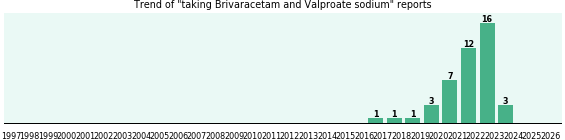
What are the common drug interactions of Brivaracetam and Valproate Sodium, by gender? *:
female:
- Nausea (feeling of having an urge to vomit)
- Vomiting
- Hyponatraemia (abnormally low level of sodium in the blood; associated with dehydration)
- Anticonvulsant drug level increased
- Drug ineffective
- Seizure (abnormal excessive or synchronous neuronal activity in the brain)
- Pneumonia aspiration (bronchopneumonia that develops due to the entrance of foreign materials into the bronchial tree)
- Staphylococcal infection (an infection with staphylococcus bacteria)
- Multiple-drug resistance
- Tremor (trembling or shaking movements in one or more parts of your body)
male:
- Seizure (abnormal excessive or synchronous neuronal activity in the brain)
- Drug ineffective
- Confusional state
- Multiple-drug resistance
- Schizophrenia (a mental disorder characterized by a breakdown of thought processes)
- Tremor (trembling or shaking movements in one or more parts of your body)
- Cognitive disorder (mental health disorders affects learning, memory, perception, and problem solving)
- Mood altered (changes in mood)
- Status epilepticus (a life-threatening condition in which the brain is in a state of persistent seizure)
- Abnormal behaviour
What are the common drug interactions of Brivaracetam and Valproate Sodium, by age (0-1 to 60+)? *:
0-1:
n/a
2-9:
- Drug ineffective
- Myoclonic epilepsy (type of epilepsy with quick little jerks of the arms, shoulder, or occasionally the legs)
- Acute hepatic failure
- Encephalitis autoimmune (autoimmune origin disturbances of consciousness and pyramidal signs, inflammation of the brain)
10-19:
- Seizure (abnormal excessive or synchronous neuronal activity in the brain)
20-29:
- Multiple-drug resistance
- Hyponatraemia (abnormally low level of sodium in the blood; associated with dehydration)
- Nausea (feeling of having an urge to vomit)
- Vomiting
- Anxiety disorder
- Depression
- Hypertension (high blood pressure)
- Petit mal epilepsy (absence seizure)
- Seizure (abnormal excessive or synchronous neuronal activity in the brain)
- Dizziness
30-39:
- Drug ineffective
- Seizure (abnormal excessive or synchronous neuronal activity in the brain)
- Alopecia (absence of hair from areas of the body)
- Anticonvulsant drug level increased
- Neurotoxicity (when the exposure to natural or artificial toxic substances, which are called neurotoxins, alters the normal activity of the nervous system)
- Overdose
40-49:
- Drug intolerance (drug sensitivity)
- Erectile dysfunction
- Mental disorder (a psychological term for a mental or behavioural pattern or anomaly that causes distress or disability)
- Psychiatric symptom
- Seizure (abnormal excessive or synchronous neuronal activity in the brain)
- Weight increased
- Drug ineffective
- Mental impairment (a condition affecting the body, perhaps through sight or hearing loss, a mobility difficulty or a health condition)
- Anaemia (lack of blood)
- Balance disorder
50-59:
- Abnormal behaviour
- Drug ineffective
- Lumbar puncture
- Memory impairment
- Nausea (feeling of having an urge to vomit)
- Seizure (abnormal excessive or synchronous neuronal activity in the brain)
- Status epilepticus (a life-threatening condition in which the brain is in a state of persistent seizure)
- Therapeutic response unexpected
- Weight increased
60+:
- Anticonvulsant drug level increased
- Limb injury
- Weight increased
- Death
- Overdose
- Pneumonia aspiration (bronchopneumonia that develops due to the entrance of foreign materials into the bronchial tree)
- Seizure (abnormal excessive or synchronous neuronal activity in the brain)
- Staphylococcal infection (an infection with staphylococcus bacteria)
- Cognitive disorder (mental health disorders affects learning, memory, perception, and problem solving)
- Drug ineffective
What are the existing conditions these people have? *
- Seizures (abnormal excessive or synchronous neuronal activity in the brain): 9 people, 20.45%
- Status Epilepticus (a life-threatening condition in which the brain is in a state of persistent seizure): 7 people, 15.91%
- Schizophrenia (a mental disorder characterized by a breakdown of thought processes): 5 people, 11.36%
- Partial Seizures (seizures which affect only a part of the brain at onset): 5 people, 11.36%
- Petit Mal Epilepsy (absence seizure): 3 people, 6.82%
- Lennox-Gastaut Syndrome (epilepsy characterized by frequent seizures and different seizure types): 3 people, 6.82%
- Depression: 3 people, 6.82%
* Approximation only. Some reports may have incomplete information.
Do you take Brivaracetam and Valproate sodium?
- Personalize this study to your gender, age, symptoms and drugs
- Predict drug outcomes for up to one year with AI
- Get an AI agent to monitor your drugs continuously
Related studies:
Effectiveness of, side effects of, and alternative drugs to the 2 drugs:
- Brivaracetam (3,319 reports)
- Valproate sodium (24,044 reports)
Browse all drug interactions of Brivaracetam and Valproate sodium:
a b c d e f g h i j k l m n o p q r s t u v w x y zSub-studies by gender and age:
Female: 0-1 2-9 10-19 20-29 30-39 40-49 50-59 60+
Male: 0-1 2-9 10-19 20-29 30-39 40-49 50-59 60+
Browse all side effects of Brivaracetam:
a b c d e f g h i j k l m n o p q r s t u v w x y zBrowse all side effects of Valproate sodium:
a b c d e f g h i j k l m n o p q r s t u v w x y zBrowse all interactions between Brivaracetam and drugs from A to Z:
a b c d e f g h i j k l m n o p q r s t u v w x y zBrowse all interactions between Valproate sodium and drugs from A to Z:
a b c d e f g h i j k l m n o p q r s t u v w x y zRelated publications that referenced our studies
- Ayano G, "Bipolar Disorders and Valproate: Pharmacokinetics, Pharmacodynamics and Therapeutic Effects and Indications of Valproate: Review of Articles", Bipolar Disord, 2017 Jan .
- Bansal S, Gupta SK, "Sodium Valproate induced priapism in an adult with bipolar affective disorder", Indian journal of pharmacology, 2013 Jan .
- Ayano G, "Bipolar Disorders and Valproate: Pharmacokinetics, Pharmacodynamics and Therapeutic Effects and Indications of Valproate: Review of Articles", Bipolar Disord, 2017 Jan .
- Bansal S, Gupta SK, "Sodium Valproate induced priapism in an adult with bipolar affective disorder", Indian journal of pharmacology, 2013 Jan .
How the study uses the data?
The study uses data from the FDA. It is based on brivaracetam and valproate sodium (the active ingredients of Brivaracetam and Valproate sodium, respectively), and Brivaracetam and Valproate sodium (the brand names). Other drugs that have the same active ingredients (e.g. generic drugs) are not considered. Dosage of drugs is not considered in the study.
How to use the study?
DO NOT STOP MEDICATIONS without first consulting your doctor. If there are any serious or long term adverse effects discovered in the study, discuss the study with your doctor to ensure that proper medication management will be in place if applicable.
Who is eHealthMe?
With medical big data and proven AI/ML algorithms, eHealthMe provides a platform for everyone to run phase IV clinical trials. We study millions of patients and 5,000 more each day. Results of our real-world drug study have been referenced on 800+ peer-reviewed medical publications, including The Lancet, Mayo Clinic Proceedings, and Nature. Our analysis results are available to researchers, health care professionals, patients (testimonials), and software developers (open API).
WARNING, DISCLAIMER, USE FOR PUBLICATION
WARNING: Please DO NOT STOP MEDICATIONS without first consulting a physician since doing so could be hazardous to your health.
DISCLAIMER: All material available on eHealthMe.com is for informational purposes only, and is not a substitute for medical advice, diagnosis, or treatment provided by a qualified healthcare provider. All information is observation-only. Our phase IV clinical studies alone cannot establish cause-effect relationship. Different individuals may respond to medication in different ways. Every effort has been made to ensure that all information is accurate, up-to-date, and complete, but no guarantee is made to that effect. The use of the eHealthMe site and its content is at your own risk.
If you use this eHealthMe study on publication, please acknowledge it with a citation: study title, URL, accessed date.
Recent studies on eHealthMe:
- Could Fenofibrate cause Scan Abnormal? - a second ago
- Could Benadryl cause Injection Site Oedema? - a second ago
- Drug interactions of Marinol and Viracept - 2 seconds ago
- Could Lorazepam cause Aphagia? - 3 seconds ago
- Hepatic Neoplasm and Pain - 9 seconds ago
- Could Femara cause Diabetes? - 16 seconds ago
- Could Evista cause Confusional State? - 24 seconds ago
- Could Skyrizi cause Basal Cell Carcinoma? - 28 seconds ago
- Could Alcohol cause Logorrhea? - 35 seconds ago
- Drug interactions of Catapres and Celecoxib - 44 seconds ago