Focalin and Zofran drug interactions - a phase IV clinical study of FDA data
Summary:
Drug interactions are reported among people who take Focalin (dexmethylphenidate hydrochloride) and Zofran (ondansetron hydrochloride). Common drug interactions include hypoaesthesia among females and anaphylactic reaction among males.
The phase IV clinical study analyzes what interactions people have when they take Focalin and Zofran. It is created by eHealthMe based on reports of 58 people who take the same drugs from the FDA, and is updated regularly.
What is Focalin?
Focalin has active ingredients of dexmethylphenidate hydrochloride. It is often used in attention deficit hyperactivity disorder. eHealthMe is studying from 4,781 Focalin users. Check the latest studies of Focalin.
What is Zofran?
Zofran has active ingredients of ondansetron hydrochloride. It is often used in nausea. eHealthMe is studying from 94,987 Zofran users. Check the latest studies of Zofran.
eHealthMe: drug outcomes in the real world
eHealthMe runs one of the largest post-marketing drug safety studies in the world. We study millions of patients and 5,000 more each day. Our data-driven phase IV clinical trials have been referenced on 800+ peer-reviewed medical publications including The Lancet, Mayo Clinic Proceedings, and Nature. Tools to study our phase IV findings are available to the public, anonymous and free >>>.
58 people who take Focalin and Zofran together, and have interactions are studied.
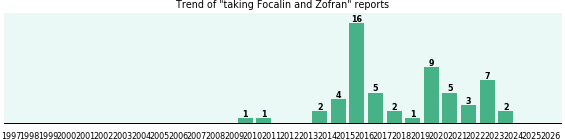
What are the common drug interactions of Focalin and Zofran, by gender? *:
female:
- Hypoaesthesia (reduced sense of touch or sensation)
- Hypothyroidism (abnormally low activity of the thyroid gland, resulting in retardation of growth and mental development)
- Immune system disorder
- Impaired healing
- Impulsive behaviour
- Influenza
- Influenza like illness
- Insomnia (sleeplessness)
- Parathyroid disorder
- Fatigue (feeling of tiredness)
male:
- Anaphylactic reaction (serious allergic reaction)
- Asthenia (weakness)
- Decreased appetite
- Depression
- Fatigue (feeling of tiredness)
- Growth retardation (delayed growth)
- Infection
- Injury
- Migraine (headache)
- Muscular weakness (muscle weakness)
What are the common drug interactions of Focalin and Zofran, by age (0-1 to 60+)? *:
0-1:
n/a
2-9:
- Drug ineffective
10-19:
- Abasia (inability to walk)
- Anxiety
- Cerebrovascular accident (sudden death of some brain cells due to lack of oxygen when the blood flow to the brain is impaired by blockage or rupture)
- Chest pain
- Deep vein thrombosis (blood clot in a major vein that usually develops in the legs and/or pelvis)
- Drug ineffective
- Dyspnoea (difficult or laboured respiration)
- Emotional distress
- General physical health deterioration (weak health status)
- Haemoptysis (blood-stained sputum from the bronchi, larynx, trachea, or lungs)
20-29:
- Overdose
- Somnolence (a state of near-sleep, a strong desire for sleep)
- Tic (a sudden, repetitive, nonrhythmic motor movement or vocalization involving discrete muscle groups)
- Abdominal pain
- Abdominal pain upper
- Biliary colic
- Cholecystitis chronic (long lasting infection of gallbladder)
- Cholelithiasis (the presence or formation of gallstones in the gallbladder or bile ducts)
- Cholesterosis (abnormal deposition of cholesterol in tissues)
- Diarrhoea
30-39:
n/a
40-49:
- Pneumonia
- Adverse drug reaction
- Chest pain
- Dry mouth
- Fatigue (feeling of tiredness)
- Gait disturbance
- Glucose tolerance impaired (blood glucose is raised beyond normal levels, but not high enough to warrant a diabetes diagnosis)
- Hemiparesis (weakness on one side of the body)
- Hypoaesthesia (reduced sense of touch or sensation)
- Hypothyroidism (abnormally low activity of the thyroid gland, resulting in retardation of growth and mental development)
50-59:
- Fatigue (feeling of tiredness)
- Ankle fracture
- Back pain
- Fall
- Intervertebral disc disorder (spinal disc disorder)
- Parathyroid disorder
- Somnambulism (sleep walking)
- Alopecia (absence of hair from areas of the body)
- Blood calcium increased
- Carpal tunnel syndrome (nerve compression at wrist results numbness weakness, pain , swelling)
60+:
- Arthritis (form of joint disorder that involves inflammation of one or more joints)
- Cardiac failure congestive
- Osteoarthritis (a joint disease caused by cartilage loss in a joint)
- Therapeutic response unexpected
- Colitis (inflammation of colon)
- Confusional state
- Constipation
- Disturbance in attention
- Drug ineffective
- Headache (pain in head)
What are the existing conditions these people have? *
- Narcolepsy (brain's inability to regulate sleep-wake cycles normally): 30 people, 51.72%
- Cataplexy (loss of muscle tone accompanied by full conscious awareness): 10 people, 17.24%
- Migraine (headache): 6 people, 10.34%
- Fibromyalgia (a long-term condition which causes pain all over the body): 5 people, 8.62%
- Drowsiness: 5 people, 8.62%
- Depression: 5 people, 8.62%
- Gallstones (stone formation by bile component): 4 people, 6.90%
- Blood Testosterone Decreased: 4 people, 6.90%
- Oedema Peripheral (superficial swelling): 3 people, 5.17%
- Multiple Sclerosis (a nervous system disease that affects your brain and spinal cord. it damages the myelin sheath): 3 people, 5.17%
* Approximation only. Some reports may have incomplete information.
Do you take Focalin and Zofran?
- Personalize this study to your gender, age, symptoms and drugs
- Predict drug outcomes for up to one year with AI
- Get an AI agent to monitor your drugs continuously
Related studies:
Effectiveness of, side effects of, and alternative drugs to the 2 drugs:
Browse all drug interactions of Focalin and Zofran:
a b c d e f g h i j k l m n o p q r s t u v w x y zSub-studies by gender and age:
Female: 0-1 2-9 10-19 20-29 30-39 40-49 50-59 60+
Male: 0-1 2-9 10-19 20-29 30-39 40-49 50-59 60+
Browse all side effects of Focalin:
a b c d e f g h i j k l m n o p q r s t u v w x y zBrowse all side effects of Zofran:
a b c d e f g h i j k l m n o p q r s t u v w x y zBrowse all interactions between Focalin and drugs from A to Z:
a b c d e f g h i j k l m n o p q r s t u v w x y zBrowse all interactions between Zofran and drugs from A to Z:
a b c d e f g h i j k l m n o p q r s t u v w x y zHow the study uses the data?
The study uses data from the FDA. It is based on dexmethylphenidate hydrochloride and ondansetron hydrochloride (the active ingredients of Focalin and Zofran, respectively), and Focalin and Zofran (the brand names). Other drugs that have the same active ingredients (e.g. generic drugs) are not considered. Dosage of drugs is not considered in the study.
How to use the study?
DO NOT STOP MEDICATIONS without first consulting your doctor. If there are any serious or long term adverse effects discovered in the study, discuss the study with your doctor to ensure that proper medication management will be in place if applicable.
Who is eHealthMe?
With medical big data and proven AI/ML algorithms, eHealthMe provides a platform for everyone to run phase IV clinical trials. We study millions of patients and 5,000 more each day. Results of our real-world drug study have been referenced on 800+ peer-reviewed medical publications, including The Lancet, Mayo Clinic Proceedings, and Nature. Our analysis results are available to researchers, health care professionals, patients (testimonials), and software developers (open API).
WARNING, DISCLAIMER, USE FOR PUBLICATION
WARNING: Please DO NOT STOP MEDICATIONS without first consulting a physician since doing so could be hazardous to your health.
DISCLAIMER: All material available on eHealthMe.com is for informational purposes only, and is not a substitute for medical advice, diagnosis, or treatment provided by a qualified healthcare provider. All information is observation-only. Our phase IV clinical studies alone cannot establish cause-effect relationship. Different individuals may respond to medication in different ways. Every effort has been made to ensure that all information is accurate, up-to-date, and complete, but no guarantee is made to that effect. The use of the eHealthMe site and its content is at your own risk.
If you use this eHealthMe study on publication, please acknowledge it with a citation: study title, URL, accessed date.
Recent studies on eHealthMe:
- Drug interactions of Calcium Carbonate and Potassium - 15 seconds ago
- Atacand vs. Guanidine Hydrochloride, side effect and effectiveness comparison - 23 seconds ago
- Hydrochlorothiazide vs. Apresoline, side effect and effectiveness comparison - 26 seconds ago
- Drug interactions of Nolvadex and Diovan - a minute ago
- Could Oxycontin cause Torsade De Pointes? - 2 minutes ago
- Remicade and Tenderness for Men aged 60+ - 2 minutes ago
- Drug interactions of Sennosides and Clopidogrel - 2 minutes ago
- Could Spironolactone cause Cardiac Arrest? - 2 minutes ago
- Drug interactions of Vyvanse and Colace - 2 minutes ago
- Drug interactions of Humulin R and Micronase - 3 minutes ago