Lopurin and Xigduo xr drug interactions - a phase IV clinical study of FDA data
Summary:
Drug interactions are reported among people who take Lopurin (allopurinol) and Xigduo xr (dapagliflozin propanediol; metformin hydrochloride). Common drug interactions include pruritus among females and sepsis among males.
The phase IV clinical study analyzes what interactions people have when they take Lopurin and Xigduo xr. It is created by eHealthMe based on reports of 57 people who take the same drugs from the FDA, and is updated regularly.
What is Lopurin?
Lopurin has active ingredients of allopurinol. It is often used in gout. eHealthMe is studying from 190,797 Lopurin users. Check the latest studies of Lopurin.
What is Xigduo xr?
Xigduo xr has active ingredients of dapagliflozin propanediol; metformin hydrochloride. eHealthMe is studying from 2,917 Xigduo xr users. Check the latest studies of Xigduo xr.
57 people who take Lopurin and Xigduo xr together, and have interactions are studied.
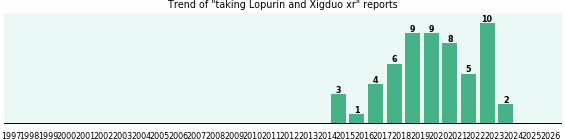
What are the common drug interactions of Lopurin and Xigduo Xr, by gender? *:
female:
- Pruritus (severe itching of the skin)
- Rash papular (redness with papule)
- Vulvovaginal pruritus (vulvovaginal severe itching)
- Arthralgia (joint pain)
- Asthma
- Breath sounds
- Chest discomfort
- Chest pain
- Cough
- Dyspnoea exertional (breathlessness or shortness of breath)
male:
- Sepsis (a severe blood infection that can lead to organ failure and death)
- Abscess (pus)
- Atrial fibrillation (fibrillation of the muscles of the atria of the heart)
- Emphysematous pyelonephritis (presence of gas-producing bacteria in the kidney)
- Constipation
- Diarrhoea
- Injection site extravasation (flow of (blood or lymph) from injection site)
- Anaemia (lack of blood)
- Asthenia (weakness)
- Blood glucose decreased
What are the common drug interactions of Lopurin and Xigduo Xr, by age (0-1 to 60+)? *:
0-1:
n/a
2-9:
n/a
10-19:
n/a
20-29:
- Arthralgia (joint pain)
- Asthma
- Breath sounds
- Chest discomfort
- Chest pain
- Cough
- Dyspnoea exertional (breathlessness or shortness of breath)
- Pleurisy (inflammation of the pleurae, which causes pain when breathing)
- Respiratory tract infection
- Urinary incontinence (inability to control the flow of urine and involuntary urination)
30-39:
- Dermoid cyst (an abnormal growth (teratoma) containing epidermis, hair follicles, and sebaceous glands)
- Anal abscess
40-49:
- Dizziness
- Hypoaesthesia (reduced sense of touch or sensation)
- Chronic kidney disease
- Renal impairment (severely reduced kidney function)
- Asthenia (weakness)
- Constipation
- Diabetic foot
- Diverticulitis (digestive disease which involves the formation of pouches (diverticula) within the bowel wall)
- Limb injury
- Muscle strain (an injury to a muscle in which the muscle fibres tear)
50-59:
- Abscess (pus)
- Abscess neck (neck abscesses)
- Anal abscess
- Cellulitis (infection under the skin)
- Genital abscess (build up of pus in genital)
- Groin abscess (pus in groin)
- Necrotising fasciitis (an uncommon life-threatening soft-tissue infection)
- Perineal abscess
- Sepsis (a severe blood infection that can lead to organ failure and death)
- Left ventricular dysfunction
60+:
- Atrial fibrillation (fibrillation of the muscles of the atria of the heart)
- Emphysematous pyelonephritis (presence of gas-producing bacteria in the kidney)
- Anaemia (lack of blood)
- Blood glucose decreased
- Blood pressure increased
- Decreased appetite
- Dysgeusia (disorder of the sense of taste)
- Dyspepsia (indigestion)
- Fluid intake reduced
- Fluid retention (an abnormal accumulation of fluid in the blood)
What are the existing conditions these people have? *
- Diabetes: 19 people, 33.33%
- Type 2 Diabetes: 18 people, 31.58%
- High Blood Pressure: 16 people, 28.07%
- Hypothyroidism (abnormally low activity of the thyroid gland, resulting in retardation of growth and mental development): 8 people, 14.04%
- High Blood Cholesterol: 7 people, 12.28%
- Iron Deficiency: 6 people, 10.53%
- Hyperuricaemia (level of uric acid in the blood that is abnormally high): 6 people, 10.53%
- Hypokalemia (low potassium): 5 people, 8.77%
- Neuralgia (pain in one or more nerves): 5 people, 8.77%
- Seasonal Allergy (allergic condition due to certain season): 5 people, 8.77%
* Approximation only. Some reports may have incomplete information.
Do you take Lopurin and Xigduo xr?
- Personalize this study to your gender, age, symptoms and drugs
- Predict drug outcomes for up to one year with AI
- Get an AI agent to monitor your drugs continuously
Related studies:
Effectiveness of, side effects of, and alternative drugs to the 2 drugs:
Browse all drug interactions of Lopurin and Xigduo xr:
a b c d e f g h i j k l m n o p q r s t u v w x y zSub-studies by gender and age:
Female: 0-1 2-9 10-19 20-29 30-39 40-49 50-59 60+
Male: 0-1 2-9 10-19 20-29 30-39 40-49 50-59 60+
Browse all side effects of Lopurin:
a b c d e f g h i j k l m n o p q r s t u v w x y zBrowse all side effects of Xigduo xr:
a b c d e f g h i j k l m n o p q r s t u v w x y zBrowse all interactions between Lopurin and drugs from A to Z:
a b c d e f g h i j k l m n o p q r s t u v w x y zBrowse all interactions between Xigduo xr and drugs from A to Z:
a b c d e f g h i j k l m n o p q r s t u v w x y zHow the study uses the data?
The study uses data from the FDA. It is based on allopurinol and dapagliflozin propanediol; metformin hydrochloride (the active ingredients of Lopurin and Xigduo xr, respectively), and Lopurin and Xigduo xr (the brand names). Other drugs that have the same active ingredients (e.g. generic drugs) are not considered. Dosage of drugs is not considered in the study.
How to use the study?
DO NOT STOP MEDICATIONS without first consulting your doctor. If there are any serious or long term adverse effects discovered in the study, discuss the study with your doctor to ensure that proper medication management will be in place if applicable.
Who is eHealthMe?
With medical big data and proven AI/ML algorithms, eHealthMe provides a platform for everyone to run phase IV clinical trials. We study millions of patients and 5,000 more each day. Results of our real-world drug study have been referenced on 800+ peer-reviewed medical publications, including The Lancet, Mayo Clinic Proceedings, and Nature. Our analysis results are available to researchers, health care professionals, patients (testimonials), and software developers (open API).
WARNING, DISCLAIMER, USE FOR PUBLICATION
WARNING: Please DO NOT STOP MEDICATIONS without first consulting a physician since doing so could be hazardous to your health.
DISCLAIMER: All material available on eHealthMe.com is for informational purposes only, and is not a substitute for medical advice, diagnosis, or treatment provided by a qualified healthcare provider. All information is observation-only. Our phase IV clinical studies alone cannot establish cause-effect relationship. Different individuals may respond to medication in different ways. Every effort has been made to ensure that all information is accurate, up-to-date, and complete, but no guarantee is made to that effect. The use of the eHealthMe site and its content is at your own risk.
If you use this eHealthMe study on publication, please acknowledge it with a citation: study title, URL, accessed date.
Recent studies on eHealthMe:
- Xyzal vs. Azelastine, side effect and effectiveness comparison - a second ago
- Could Motrin cause Cytomegalovirus Infection? - a second ago
- Paxil vs. Guaifenesin, side effect and effectiveness comparison - a second ago
- Comtan vs. Cymbalta, side effect and effectiveness comparison - 11 seconds ago
- Eliquis vs. Xanax, side effect and effectiveness comparison - 11 seconds ago
- Could Glucotrol cause Sinusitis - Acute? - 13 seconds ago
- Could Glucotrol cause Sinusitis? - 13 seconds ago
- Qnasl vs. Allegra, side effect and effectiveness comparison - 15 seconds ago
- Drug interactions of Trental and Atarax - 16 seconds ago
- Cough and Abdominal Pain - 22 seconds ago