Protonix and Navane drug interactions - a phase IV clinical study of FDA data
Summary:
Drug interactions are reported among people who take Protonix (pantoprazole sodium) and Navane (thiothixene). Common drug interactions include oropharyngeal pain among females and type 2 diabetes mellitus among males.
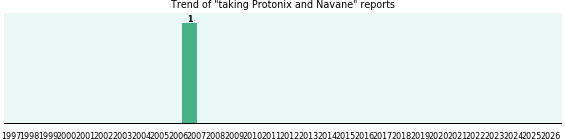
The phase IV clinical study analyzes what interactions people have when they take Protonix and Navane. It is created by eHealthMe based on reports of 51 people who take the same drugs from the FDA, and is updated regularly.
What is Protonix?
Protonix has active ingredients of pantoprazole sodium. It is often used in gastroesophageal reflux disease. eHealthMe is studying from 132,658 Protonix users. Check the latest studies of Protonix.
What is Navane?
Navane has active ingredients of thiothixene. It is often used in schizoaffective disorder. eHealthMe is studying from 1,558 Navane users. Check the latest studies of Navane.
51 people who take Protonix and Navane together, and have interactions are studied.
What are the common drug interactions of Protonix and Navane, by gender? *:
female:
- Oropharyngeal pain
- Pneumonia
- Tooth abscess (pus formation in tooth)
- Tremor (trembling or shaking movements in one or more parts of your body)
- Hyperglycaemia (high blood sugar)
- Renal failure (kidney dysfunction)
- Anxiety
- Arrhythmia (irregular heartbeat)
- Asthenia (weakness)
- Balance disorder
male:
- Type 2 diabetes mellitus
- Diabetes mellitus (diabetes, caused by a deficiency of the pancreatic hormone insulin)
- Psychotic disorder
- Schizophrenia, paranoid type (delusions and auditory hallucinations but relatively normal intellectual functioning and expression of affect)
- Sinusitis (inflammation of sinus)
- Abdominal pain
- Chest discomfort
- Chest pain
- Diabetic coma
- Diabetic neuropathy (neuropathic disorders that are associated with diabetes mellitus)
What are the common drug interactions of Protonix and Navane, by age (0-1 to 60+)? *:
0-1:
- Balance disorder
- Bradycardia (abnormally slow heart action)
- Cholecystitis chronic (long lasting infection of gallbladder)
- Convulsion (muscles contract and relax rapidly and repeatedly, resulting in an uncontrolled shaking of the body)
- Diabetic complication
- Dyspnoea (difficult or laboured respiration)
- Hyponatraemia (abnormally low level of sodium in the blood; associated with dehydration)
- Hypotension (abnormally low blood pressure)
- Nervous system disorder (a general class of medical conditions affecting the nervous system)
- Orthopnoea (shortness of breath (dyspnea) when lying down)
2-9:
n/a
10-19:
n/a
20-29:
n/a
30-39:
- Type 2 diabetes mellitus
- Diabetes mellitus (diabetes, caused by a deficiency of the pancreatic hormone insulin)
- Ill-defined disorder
- Hypertension (high blood pressure)
- Hypothyroidism (abnormally low activity of the thyroid gland, resulting in retardation of growth and mental development)
- Schizophrenia, paranoid type (delusions and auditory hallucinations but relatively normal intellectual functioning and expression of affect)
- Abdominal pain
- Chest discomfort
- Chest pain
- Depression
40-49:
- Diabetes mellitus (diabetes, caused by a deficiency of the pancreatic hormone insulin)
- Pancreatitis acute (sudden inflammation of pancreas)
- Convulsion (muscles contract and relax rapidly and repeatedly, resulting in an uncontrolled shaking of the body)
- Dyspnoea (difficult or laboured respiration)
- Hypokalaemia (low potassium)
- Blood cholesterol increased
- Obesity (having too much body fat)
- Diabetic ketoacidosis (diabetic ketoacidosis (dka) is high concentrations of ketone bodies)
- Pancreatitis (inflammation of pancreas)
- Abdominal pain
50-59:
- Depression
- Abdominal pain
- Anxiety
- Bronchitis (inflammation of the mucous membrane in the bronchial tubes)
- Cardiac failure congestive
- Constipation
- Coronary artery disease (plaque building up along the inner walls of the arteries of the heart, which narrows the arteries and restricts blood flow to the heart)
- Cough
- Diabetic neuropathy (neuropathic disorders that are associated with diabetes mellitus)
- Headache (pain in head)
60+:
- Crying
- Drug withdrawal syndrome (interfere with normal social, occupational, or other functioning. are not due to another medical condition, drug use, or discontinuation)
- Fall
- Pain
What are the existing conditions these people have? *
- Depression: 24 people, 47.06%
- Schizophrenia (a mental disorder characterized by a breakdown of thought processes): 21 people, 41.18%
- Bipolar Disorder (mood disorder): 21 people, 41.18%
- Stress And Anxiety: 19 people, 37.25%
- Pain: 14 people, 27.45%
- Sleep Disorder: 12 people, 23.53%
- Agitation (state of anxiety or nervous excitement): 12 people, 23.53%
- High Blood Pressure: 11 people, 21.57%
- Insomnia (sleeplessness): 8 people, 15.69%
- Extrapyramidal Disorder (involuntary muscle spasms in the face and neck): 8 people, 15.69%
* Approximation only. Some reports may have incomplete information.
Do you take Protonix and Navane?
- Personalize this study to your gender, age, symptoms and drugs
- Predict drug outcomes for up to one year with AI
- Get an AI agent to monitor your drugs continuously
Related studies:
Effectiveness of, side effects of, and alternative drugs to the 2 drugs:
Browse all drug interactions of Protonix and Navane:
a b c d e f g h i j k l m n o p q r s t u v w x y zSub-studies by gender and age:
Female: 0-1 2-9 10-19 20-29 30-39 40-49 50-59 60+
Male: 0-1 2-9 10-19 20-29 30-39 40-49 50-59 60+
Browse all side effects of Protonix:
a b c d e f g h i j k l m n o p q r s t u v w x y zBrowse all side effects of Navane:
a b c d e f g h i j k l m n o p q r s t u v w x y zBrowse all interactions between Protonix and drugs from A to Z:
a b c d e f g h i j k l m n o p q r s t u v w x y zBrowse all interactions between Navane and drugs from A to Z:
a b c d e f g h i j k l m n o p q r s t u v w x y zHow the study uses the data?
The study uses data from the FDA. It is based on pantoprazole sodium and thiothixene (the active ingredients of Protonix and Navane, respectively), and Protonix and Navane (the brand names). Other drugs that have the same active ingredients (e.g. generic drugs) are not considered. Dosage of drugs is not considered in the study.
How to use the study?
DO NOT STOP MEDICATIONS without first consulting your doctor. If there are any serious or long term adverse effects discovered in the study, discuss the study with your doctor to ensure that proper medication management will be in place if applicable.
Who is eHealthMe?
With medical big data and proven AI/ML algorithms, eHealthMe provides a platform for everyone to run phase IV clinical trials. We study millions of patients and 5,000 more each day. Results of our real-world drug study have been referenced on 800+ peer-reviewed medical publications, including The Lancet, Mayo Clinic Proceedings, and Nature. Our analysis results are available to researchers, health care professionals, patients (testimonials), and software developers (open API).
WARNING, DISCLAIMER, USE FOR PUBLICATION
WARNING: Please DO NOT STOP MEDICATIONS without first consulting a physician since doing so could be hazardous to your health.
DISCLAIMER: All material available on eHealthMe.com is for informational purposes only, and is not a substitute for medical advice, diagnosis, or treatment provided by a qualified healthcare provider. All information is observation-only. Our phase IV clinical studies alone cannot establish cause-effect relationship. Different individuals may respond to medication in different ways. Every effort has been made to ensure that all information is accurate, up-to-date, and complete, but no guarantee is made to that effect. The use of the eHealthMe site and its content is at your own risk.
If you use this eHealthMe study on publication, please acknowledge it with a citation: study title, URL, accessed date.
Recent studies on eHealthMe:
- Could Tamoxifen Citrate cause Pneumothorax? - 14 seconds ago
- Could Angeliq cause Pain Exacerbated? - 15 seconds ago
- Drug interactions of Terbinafine Hydrochloride and Paroxetine - 21 seconds ago
- Could Sitagliptin Phosphate cause Bradycardia? - 22 seconds ago
- Could Tysabri cause Stress And Anxiety? - 52 seconds ago
- Could Uloric cause Atrial Fibrillation/Flutter? - 53 seconds ago
- Could Advair Diskus 250/50 cause Respiratory Acidosis? - 54 seconds ago
- Could Ventolin Hfa cause Glossitis? - 59 seconds ago
- Drug interactions of Adderall and Takhzyro - a minute ago
- Drug interactions of Percocet and Ms Contin - a minute ago