Adhd and Haematocrit abnormal
Summary:
Haematocrit abnormal is reported only by a few people with Adhd.
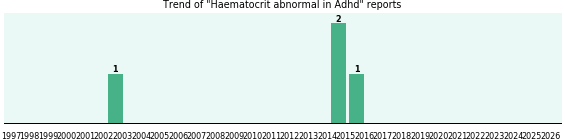
The study analyzes which people have Haematocrit abnormal with Adhd. It is created by eHealthMe based on 4 people who have Haematocrit abnormal and Adhd from the Food and Drug Administration (FDA), and is updated regularly.
What is Adhd?
Adhd (adhd-mental disorders that develop in children) is found to be associated with 593 drugs and 1,390 conditions by eHealthMe. Check the latest studies of Adhd.
What is Haematocrit abnormal?
Haematocrit abnormal is found to be associated with 280 drugs and 595 conditions by eHealthMe. Check the latest studies of Haematocrit abnormal.
4 people who have Adhd and Haematocrit Abnormal are studied.
Gender of people who have Adhd and experienced Haematocrit Abnormal *:
- female: 0.0 %
- male: 100 %
Age of people who have Adhd and experienced Haematocrit Abnormal *:
- 0-1: 0.0 %
- 2-9: 33.33 %
- 10-19: 33.33 %
- 20-29: 0.0 %
- 30-39: 0.0 %
- 40-49: 0.0 %
- 50-59: 0.0 %
- 60+: 33.33 %
Common co-existing conditions for these people *:
- Weakness: 1 person, 25.00%
- Gastroesophageal Reflux Disease (a condition in which stomach contents leak backward from the stomach into the oesophagus): 1 person, 25.00%
- Anger: 1 person, 25.00%
- Bipolar Disorder (mood disorder): 1 person, 25.00%
- Blood Pressure Abnormal: 1 person, 25.00%
- Depressed Mood: 1 person, 25.00%
- Depression: 1 person, 25.00%
- Fatigue (feeling of tiredness): 1 person, 25.00%
- Generalized Anxiety Disorder (excessive, uncontrollable, unexplained and often irrational worry): 1 person, 25.00%
- Small For Dates Baby (an unborn baby is growing more slowly and is smaller than most babies are at the same age): 1 person, 25.00%
Common drugs taken by these people *:
- Adderall: 2 people, 50.00%
- Sulfamethoxazole: 1 person, 25.00%
- Androgel: 1 person, 25.00%
- Calcium: 1 person, 25.00%
- Cimetidine: 1 person, 25.00%
- Concerta: 1 person, 25.00%
- Dactinomycin: 1 person, 25.00%
- Depo-Testosterone: 1 person, 25.00%
- Diovan: 1 person, 25.00%
- Zyprexa: 1 person, 25.00%
Common symptoms for these people *:
- Transient Ischaemic Attack (a transient episode of neurologic dysfunction caused by ischemia (loss of blood flow)): 1 person, 25.00%
- Therapeutic Response Decreased (less preventive response): 1 person, 25.00%
- Headache (pain in head): 1 person, 25.00%
- Head Injury: 1 person, 25.00%
- Hallucinations (sensations that appear real but are created by your mind): 1 person, 25.00%
- Hallucination, Auditory (perceiving sounds without auditory stimulus): 1 person, 25.00%
- Haemoglobin Decreased: 1 person, 25.00%
- Haemoglobin Abnormal: 1 person, 25.00%
- Fatigue (feeling of tiredness): 1 person, 25.00%
- Excoriation (to tear or wear off the skin of): 1 person, 25.00%
* Approximation only. Some reports may have incomplete information.
Do you take medications and have Haematocrit abnormal?
- Check whether Haematocrit abnormal is associated with a drug or a conditionRelated publications that referenced our studies
- Najib J, Wimer D, Zeng J, Lam KW, Romanyak N, Paige Morgan E, Thadavila A, "Review of Lisdexamfetamine Dimesylate in Adults With Attention-Deficit/Hyperactivity Disorder", Journal of central nervous system disease, 2017 Aug .
- Maneeton N, Maneeton B, Suttajit S, Reungyos J, Srisurapanont M, Martin SD, "Exploratory meta-analysis on lisdexamfetamine versus placebo in adult ADHD", Drug design, development and therapy, 2017 Jan .
- Coskun, M., & Adak, I. , "Excessive and frequent menstrual bleeding with methylphenidate in an adolescent girl with attention-deficit hyperactivity disorder", Journal of clinical psychopharmacology, 2014 Jan .
- Maneeton B, Maneeton N, Likhitsathian S, Suttajit S, Narkpongphun A, Srisurapanont M, Woottiluk P, "Comparative efficacy, acceptability, and tolerability of lisdexamfetamine in child and adolescent ADHD: a meta-analysis of randomized, controlled trials", Drug design, development and therapy, 2013 Jan .
- Najib J, Wimer D, Zeng J, Lam KW, Romanyak N, Paige Morgan E, Thadavila A, "Review of Lisdexamfetamine Dimesylate in Adults With Attention-Deficit/Hyperactivity Disorder", Journal of central nervous system disease, 2017 Aug .
- Maneeton N, Maneeton B, Suttajit S, Reungyos J, Srisurapanont M, Martin SD, "Exploratory meta-analysis on lisdexamfetamine versus placebo in adult ADHD", Drug design, development and therapy, 2017 Jan .
- Coskun, M., & Adak, I. , "Excessive and frequent menstrual bleeding with methylphenidate in an adolescent girl with attention-deficit hyperactivity disorder", Journal of clinical psychopharmacology, 2014 Jan .
- Maneeton B, Maneeton N, Likhitsathian S, Suttajit S, Narkpongphun A, Srisurapanont M, Woottiluk P, "Comparative efficacy, acceptability, and tolerability of lisdexamfetamine in child and adolescent ADHD: a meta-analysis of randomized, controlled trials", Drug design, development and therapy, 2013 Jan .
Related studies:
Treatments, associated drugs and conditions:
- Adhd (120,334 reports)
- Haematocrit abnormal (1,610 reports)
All the drugs that are associated with Haematocrit abnormal:
- Haematocrit abnormal (280 drugs)
All the conditions that are associated with Haematocrit abnormal:
- Haematocrit abnormal (595 conditions)
How the study uses the data?
How to use the study?
DO NOT STOP MEDICATIONS without first consulting your doctor. If there are any serious or long term adverse effects discovered in the study, discuss the study with your doctor to ensure that proper medication management will be in place if applicable.
The study is based on Haematocrit abnormal and Adhd, and their synonyms.
Who is eHealthMe?
With medical big data and proven AI/ML algorithms, eHealthMe provides a platform for everyone to run phase IV clinical trials. We study millions of patients and 5,000 more each day. Results of our real-world drug study have been referenced on 800+ peer-reviewed medical publications, including The Lancet, Mayo Clinic Proceedings, and Nature. Our analysis results are available to researchers, health care professionals, patients (testimonials), and software developers (open API).
WARNING, DISCLAIMER, USE FOR PUBLICATION
WARNING: Please DO NOT STOP MEDICATIONS without first consulting a physician since doing so could be hazardous to your health.
DISCLAIMER: All material available on eHealthMe.com is for informational purposes only, and is not a substitute for medical advice, diagnosis, or treatment provided by a qualified healthcare provider. All information is observation-only. Our phase IV clinical studies alone cannot establish cause-effect relationship. Different individuals may respond to medication in different ways. Every effort has been made to ensure that all information is accurate, up-to-date, and complete, but no guarantee is made to that effect. The use of the eHealthMe site and its content is at your own risk.
If you use this eHealthMe study on publication, please acknowledge it with a citation: study title, URL, accessed date.
Recent studies on eHealthMe:
- Could Miacalcin cause Squamous Cell Carcinoma Of Skin? - a second ago
- Drug interactions of Ogen and Humira - 6 seconds ago
- Could Tofacitinib cause Thrombosis? - 31 seconds ago
- Drug interactions of B12 and Carnitor - 43 seconds ago
- Could Pradaxa cause Haemothorax? - 49 seconds ago
- Could Metronidazole cause Agranulocytosis? - 52 seconds ago
- Could Lasix cause Thyroid Neoplasm? - 55 seconds ago
- Could Clonidine cause Hypotonia? - 55 seconds ago
- Drug interactions of Guaifenesin and Chlorhexidine Gluconate - a minute ago
- Drug interactions of Carbamazepine and Aubagio - a minute ago