Acth and Valium drug interactions - a phase IV clinical study of FDA data
Summary:
Drug interactions are reported among people who take Acth (corticotropin) and Valium (diazepam). Common drug interactions include gait disturbance among females and respiratory distress among males.
The phase IV clinical study analyzes what interactions people have when they take Acth and Valium. It is created by eHealthMe based on reports of 47 people who take the same drugs from the FDA, and is updated regularly.
What is Acth?
Acth has active ingredients of corticotropin. eHealthMe is studying from 5,402 Acth users. Check the latest studies of Acth.
What is Valium?
Valium has active ingredients of diazepam. It is often used in stress and anxiety. eHealthMe is studying from 48,647 Valium users. Check the latest studies of Valium.
47 people who take Acth and Valium together, and have interactions are studied.
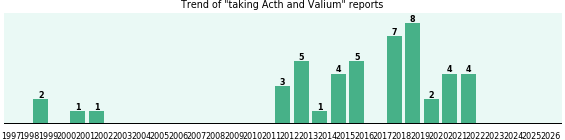
What are the common drug interactions of Acth and Valium, by gender? *:
female:
- Gait disturbance
- Glucose urine present
- Hemiparesis (weakness on one side of the body)
- Hyperhidrosis (abnormally increased sweating)
- Hypothalamo-pituitary disorder (loss of function in an endocrine gland due to failure of the pituitary gland to secrete hormones which stimulate that gland's function)
- Hypothyroidism (abnormally low activity of the thyroid gland, resulting in retardation of growth and mental development)
- Infusion related reaction
- Loss of control of legs
- Metamorphopsia (a type of distorted vision in which a grid of straight lines appears wavy and parts of the grid may appear blank)
- Multiple sclerosis relapse (reoccurrence of a nervous system disease that affects your brain and spinal cord. it damages the myelin sheath)
male:
- Respiratory distress (difficulty in breathing)
- General physical health deterioration (weak health status)
- Anaemia (lack of blood)
- Blood glucose increased
- Drug ineffective
- Multiple sclerosis (a nervous system disease that affects your brain and spinal cord. it damages the myelin sheath)
- Muscular weakness (muscle weakness)
- Affect lability (emotional incontinence)
- Aggression
- Alopecia (absence of hair from areas of the body)
What are the common drug interactions of Acth and Valium, by age (0-1 to 60+)? *:
0-1:
- Respiratory distress (difficulty in breathing)
- Respiratory disorder (respiratory disease)
- Drug effect decreased
- Gastrooesophageal reflux disease (stomach contents (food or liquid) leak backwards from the stomach into the oesophagus)
- Glaucoma (increased fluid pressure in the eye with vision loss)
- Lacrimation increased
- Papilloedema (optic disc swelling)
- Red eye
- Seizure (abnormal excessive or synchronous neuronal activity in the brain)
- Strabismus (a disorder in which the two eyes do not line up in the same direction)
2-9:
n/a
10-19:
n/a
20-29:
- Appendicitis (inflammation of the appendix)
- Dizziness
- Fatigue (feeling of tiredness)
- Abdominal discomfort
- Abdominal pain upper
- Dyspepsia (indigestion)
30-39:
- Amnesia (deficit in memory caused by brain damage, disease, or psychological trauma)
- Asthenia (weakness)
- Balance disorder
- Cardiac flutter (abnormal heart rhythm)
- Chest discomfort
- Dizziness
- Fall
- Fatigue (feeling of tiredness)
- Feeling drunk
- Gait disturbance
40-49:
- General physical health deterioration (weak health status)
- Headache (pain in head)
- Hypoaesthesia (reduced sense of touch or sensation)
- Insomnia (sleeplessness)
- Limb discomfort (discomfort in leg)
- Malaise (a feeling of general discomfort or uneasiness)
- Memory impairment
- Pain
- Pain in extremity
- Relapsing-remitting multiple sclerosis (reoccurrence of an inflammatory disease in which the insulating covers of nerve cells in the brain and spinal cord are damaged)
50-59:
- Multiple sclerosis relapse (reoccurrence of a nervous system disease that affects your brain and spinal cord. it damages the myelin sheath)
- Arthralgia (joint pain)
- Blood glucose increased
- Drug ineffective
- Fluid retention (an abnormal accumulation of fluid in the blood)
- Frequent bowel movements
- Influenza like illness
- Liver disorder (liver diseases)
- Sciatica (a set of symptoms including pain caused by general compression or irritation of one of five spinal nerve roots of each sciatic nerve)
- Tremor (trembling or shaking movements in one or more parts of your body)
60+:
- Asthenia (weakness)
- Dysphagia (a condition in which swallowing is difficult or painful)
- Paraesthesia (sensation of tingling, tickling, prickling, pricking, or burning of a person's skin with no apparent long-term physical effect)
- Hypoaesthesia (reduced sense of touch or sensation)
- Muscular weakness (muscle weakness)
- Diarrhoea
- Adverse event
- Arthritis (form of joint disorder that involves inflammation of one or more joints)
- Blood pressure fluctuation
- Blood pressure increased
What are the existing conditions these people have? *
- Multiple Sclerosis (a nervous system disease that affects your brain and spinal cord. it damages the myelin sheath): 21 people, 44.68%
- Infantile Spasms: 8 people, 17.02%
- Gait Disturbance: 8 people, 17.02%
- Multiple Sclerosis Relapse (reoccurrence of a nervous system disease that affects your brain and spinal cord. it damages the myelin sheath): 4 people, 8.51%
- Systemic Lupus Erythematosus (an autoimmune disease, which means the body's immune system mistakenly, attacks healthy tissue): 3 people, 6.38%
- Raynaud's Phenomenon (discoloration of the fingers, toes, and occasionally other areas): 3 people, 6.38%
- Polyarthritis (arthritis which involves 5 or more joints simultaneously): 3 people, 6.38%
* Approximation only. Some reports may have incomplete information.
Do you take Acth and Valium?
- Personalize this study to your gender, age, symptoms and drugs
- Predict drug outcomes for up to one year with AI
- Get an AI agent to monitor your drugs continuously
Related studies:
Effectiveness of, side effects of, and alternative drugs to the 2 drugs:
Browse all drug interactions of Acth and Valium:
a b c d e f g h i j k l m n o p q r s t u v w x y zSub-studies by gender and age:
Female: 0-1 2-9 10-19 20-29 30-39 40-49 50-59 60+
Male: 0-1 2-9 10-19 20-29 30-39 40-49 50-59 60+
Browse all side effects of Acth:
a b c d e f g h i j k l m n o p q r s t u v w x y zBrowse all side effects of Valium:
a b c d e f g h i j k l m n o p q r s t u v w x y zBrowse all interactions between Acth and drugs from A to Z:
a b c d e f g h i j k l m n o p q r s t u v w x y zBrowse all interactions between Valium and drugs from A to Z:
a b c d e f g h i j k l m n o p q r s t u v w x y zHow the study uses the data?
The study uses data from the FDA. It is based on corticotropin and diazepam (the active ingredients of Acth and Valium, respectively), and Acth and Valium (the brand names). Other drugs that have the same active ingredients (e.g. generic drugs) are not considered. Dosage of drugs is not considered in the study.
How to use the study?
DO NOT STOP MEDICATIONS without first consulting your doctor. If there are any serious or long term adverse effects discovered in the study, discuss the study with your doctor to ensure that proper medication management will be in place if applicable.
Who is eHealthMe?
With medical big data and proven AI/ML algorithms, eHealthMe provides a platform for everyone to run phase IV clinical trials. We study millions of patients and 5,000 more each day. Results of our real-world drug study have been referenced on 800+ peer-reviewed medical publications, including The Lancet, Mayo Clinic Proceedings, and Nature. Our analysis results are available to researchers, health care professionals, patients (testimonials), and software developers (open API).
WARNING, DISCLAIMER, USE FOR PUBLICATION
WARNING: Please DO NOT STOP MEDICATIONS without first consulting a physician since doing so could be hazardous to your health.
DISCLAIMER: All material available on eHealthMe.com is for informational purposes only, and is not a substitute for medical advice, diagnosis, or treatment provided by a qualified healthcare provider. All information is observation-only. Our phase IV clinical studies alone cannot establish cause-effect relationship. Different individuals may respond to medication in different ways. Every effort has been made to ensure that all information is accurate, up-to-date, and complete, but no guarantee is made to that effect. The use of the eHealthMe site and its content is at your own risk.
If you use this eHealthMe study on publication, please acknowledge it with a citation: study title, URL, accessed date.
Recent studies on eHealthMe:
- Could Dexamethasone Sodium Phosphate cause Conjunctivitis? - 24 seconds ago
- Limb Discomfort and Stroke - 39 seconds ago
- Rickets and Breast Lump - 49 seconds ago
- Prednisone vs. Albuterol, side effect and effectiveness comparison - a minute ago
- Could Timolol Maleate cause Broken Bone? - a minute ago
- Could Unithroid cause Depression? - a minute ago
- Amoxicillin vs. Cefazolin, side effect and effectiveness comparison - a minute ago
- Drug interactions of Amantadine and Ibuprofen - a minute ago
- Could Amcill cause Stress And Anxiety? - 2 minutes ago
- Drug interactions of Firmagon and Vitamins - 2 minutes ago