Amlodipine and Lactic acid drug interactions - a phase IV clinical study of FDA data
Summary:
Drug interactions are reported among people who take Amlodipine (amlodipine besylate) and Lactic acid (alpha hydroxy acids). Common drug interactions include cardio-respiratory arrest among females and alanine aminotransferase increased among males.
The phase IV clinical study analyzes what interactions people have when they take Amlodipine and Lactic acid. It is created by eHealthMe based on reports of 25 people who take the same drugs from the FDA, and is updated regularly.
What is Amlodipine?
Amlodipine has active ingredients of amlodipine besylate. It is often used in high blood pressure. eHealthMe is studying from 354,829 Amlodipine users. Check the latest studies of Amlodipine.
What is Lactic acid?
Lactic acid has active ingredients of alpha hydroxy acids. eHealthMe is studying from 455 Lactic acid users. Check the latest studies of Lactic acid.
25 people who take Amlodipine and Lactic acid together, and have interactions are studied.
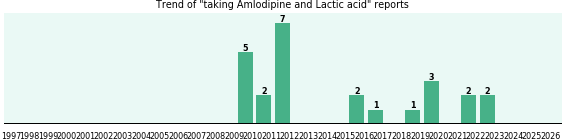
What are the common drug interactions of Amlodipine and Lactic Acid, by gender? *:
female:
- Cardio-respiratory arrest (sudden dysfunction of heart and lungs)
- Dizziness
- Glossoptosis
- Respiratory depression (respiration has a rate below 12 breaths)
- Somnolence (a state of near-sleep, a strong desire for sleep)
- Abscess limb (limb infection)
- Blood alkaline phosphatase increased
- Blood creatinine increased
- Cardiac failure congestive
- Cellulitis (infection under the skin)
male:
- Alanine aminotransferase increased
- Aspartate aminotransferase increased
- Brain natriuretic peptide increased
- Cardiac failure
- Cardiomegaly (increased size of heart than normal)
- Decreased appetite
- Disease progression
- Face oedema (swelling of face)
- General physical health deterioration (weak health status)
- Generalised oedema (swelling all over the body)
What are the common drug interactions of Amlodipine and Lactic Acid, by age (0-1 to 60+)? *:
0-1:
n/a
2-9:
- Brain natriuretic peptide increased
- Cardiac failure
- Cardiomegaly (increased size of heart than normal)
- Decreased appetite
- Disease progression
- Face oedema (swelling of face)
- General physical health deterioration (weak health status)
- Generalised oedema (swelling all over the body)
- Hepatomegaly (abnormal enlargement of the liver)
- Hot flush (sudden feelings of heat)
10-19:
n/a
20-29:
n/a
30-39:
n/a
40-49:
- Abscess limb (limb infection)
- Anal abscess
- Cellulitis (infection under the skin)
- Genital abscess (build up of pus in genital)
- Groin abscess (pus in groin)
- Nausea (feeling of having an urge to vomit)
- Necrotising fasciitis (an uncommon life-threatening soft-tissue infection)
- Pain
- Perineal abscess
- Sepsis (a severe blood infection that can lead to organ failure and death)
50-59:
- Cardiac failure congestive
- Chronic kidney disease
- Colonic polyp (extra part of colon tissue grow in intestine)
- Convulsion (muscles contract and relax rapidly and repeatedly, resulting in an uncontrolled shaking of the body)
- Drug ineffective
- Drug level decreased
- Fungal infection
- Graft versus host disease (the donated bone marrow or stem cells view the recipient's body as foreign, and the donated cells/bone marrow attack the body)
- Liver disorder (liver diseases)
- Staphylococcal infection (an infection with staphylococcus bacteria)
60+:
- Alanine aminotransferase increased
- Aspartate aminotransferase increased
- Blood creatinine increased
- Chest pain
- Device related infection
- Hypokalaemia (low potassium)
- Nephritis (inflammation of the nephrons in the kidneys)
- Oedema (fluid collection in tissue)
- Palpitations (feelings or sensations that your heart is pounding or racing)
- Pruritus (severe itching of the skin)
What are the existing conditions these people have? *
- Pain: 4 people, 16.00%
- Weight Decreased: 3 people, 12.00%
- Type 2 Diabetes: 3 people, 12.00%
- High Blood Cholesterol: 3 people, 12.00%
- Hypotension (abnormally low blood pressure): 3 people, 12.00%
- Diabetes: 3 people, 12.00%
- Insomnia (sleeplessness): 3 people, 12.00%
- Constipation: 3 people, 12.00%
- Gastroesophageal Reflux Disease (a condition in which stomach contents leak backward from the stomach into the oesophagus): 3 people, 12.00%
- Coronary Heart Disease (narrowing or blockage of the coronary arteries): 2 people, 8.00%
* Approximation only. Some reports may have incomplete information.
Do you take Amlodipine and Lactic acid?
- Personalize this study to your gender, age, symptoms and drugs
- Predict drug outcomes for up to one year with AI
- Get an AI agent to monitor your drugs continuously
Related studies:
Effectiveness of, side effects of, and alternative drugs to the 2 drugs:
- Amlodipine (354,829 reports)
- Lactic acid (455 reports)
Browse all drug interactions of Amlodipine and Lactic acid:
a b c d e f g h i j k l m n o p q r s t u v w x y zSub-studies by gender and age:
Female: 0-1 2-9 10-19 20-29 30-39 40-49 50-59 60+
Male: 0-1 2-9 10-19 20-29 30-39 40-49 50-59 60+
Browse all side effects of Amlodipine:
a b c d e f g h i j k l m n o p q r s t u v w x y zBrowse all side effects of Lactic acid:
a b c d e f g h i j k l m n o p q r s t u v w x y zBrowse all interactions between Amlodipine and drugs from A to Z:
a b c d e f g h i j k l m n o p q r s t u v w x y zBrowse all interactions between Lactic acid and drugs from A to Z:
a b c d e f g h i j k l m n o p q r s t u v w x y zHow the study uses the data?
The study uses data from the FDA. It is based on amlodipine besylate and alpha hydroxy acids (the active ingredients of Amlodipine and Lactic acid, respectively), and Amlodipine and Lactic acid (the brand names). Other drugs that have the same active ingredients (e.g. generic drugs) are not considered. Dosage of drugs is not considered in the study.
How to use the study?
DO NOT STOP MEDICATIONS without first consulting your doctor. If there are any serious or long term adverse effects discovered in the study, discuss the study with your doctor to ensure that proper medication management will be in place if applicable.
Who is eHealthMe?
With medical big data and proven AI/ML algorithms, eHealthMe provides a platform for everyone to run phase IV clinical trials. We study millions of patients and 5,000 more each day. Results of our real-world drug study have been referenced on 800+ peer-reviewed medical publications, including The Lancet, Mayo Clinic Proceedings, and Nature. Our analysis results are available to researchers, health care professionals, patients (testimonials), and software developers (open API).
WARNING, DISCLAIMER, USE FOR PUBLICATION
WARNING: Please DO NOT STOP MEDICATIONS without first consulting a physician since doing so could be hazardous to your health.
DISCLAIMER: All material available on eHealthMe.com is for informational purposes only, and is not a substitute for medical advice, diagnosis, or treatment provided by a qualified healthcare provider. All information is observation-only. Our phase IV clinical studies alone cannot establish cause-effect relationship. Different individuals may respond to medication in different ways. Every effort has been made to ensure that all information is accurate, up-to-date, and complete, but no guarantee is made to that effect. The use of the eHealthMe site and its content is at your own risk.
If you use this eHealthMe study on publication, please acknowledge it with a citation: study title, URL, accessed date.
Recent studies on eHealthMe:
- Could Humulin R cause Convulsion? - 2 seconds ago
- Drug interactions of Selenium Sulfide and Acidophilus - 3 seconds ago
- Could Duspatal cause Diastolic Dysfunction? - 5 seconds ago
- Could Ibu cause Incision Site Infection? - 5 seconds ago
- Could Calcium cause Hypopnea? - 6 seconds ago
- Drug interactions of Xolair and Maxzide - 9 seconds ago
- Drug interactions of Minocycline Hydrochloride and Thiamine Hydrochloride - 10 seconds ago
- Drug interactions of Zocor and Famotidine - 11 seconds ago
- Could Losartan Potassium cause Drug Eruption? - 11 seconds ago
- Could Indapamide cause Dermatitis? - 21 seconds ago