Campath and Heparin drug interactions - a phase IV clinical study of FDA data
Summary:
Drug interactions are reported among people who take Campath (alemtuzumab) and Heparin (heparin sodium). Common drug interactions include nephropathy toxic among females and renal failure acute among males.
The phase IV clinical study analyzes what interactions people have when they take Campath and Heparin. It is created by eHealthMe based on reports of 45 people who take the same drugs from the FDA, and is updated regularly.
What is Campath?
Campath has active ingredients of alemtuzumab. eHealthMe is studying from 4,909 Campath users. Check the latest studies of Campath.
What is Heparin?
Heparin has active ingredients of heparin sodium. It is often used in blood clots. eHealthMe is studying from 92,141 Heparin users. Check the latest studies of Heparin.
45 people who take Campath and Heparin together, and have interactions are studied.
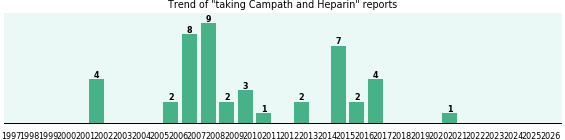
What are the common drug interactions of Campath and Heparin, by gender? *:
female:
- Nephropathy toxic (damage to kidney due to toxins)
- Pneumonia legionella (pneumonia caused by the bacteria legionella)
- Renal failure (kidney dysfunction)
- Transplant rejection (a transplant material is not worked)
- Acinetobacter bacteraemia (infection of bacteria)
- Acinetobacter infection (infection by group of bacteria commonly found in soil and water)
- Alanine aminotransferase increased
- Anaphylactoid reaction (type of anaphylaxis that does not involve an allergic reaction but is due to direct mast cell degranulation)
- Aspartate aminotransferase increased
- Chronic graft versus host disease in skin (damage by immune cells to skin after grafting)
male:
- Renal failure acute (rapid kidney dysfunction)
- Hypotension (abnormally low blood pressure)
- Renal tubular necrosis (death of kidney tubules)
- Sepsis syndrome (a clinical condition of blood infection)
- Syncope (loss of consciousness with an inability to maintain postural tone)
- Hypoxia (low oxygen in tissues)
- Multi-organ failure (multisystem organ failure)
- Respiratory failure (inadequate gas exchange by the respiratory system)
- Hyperkalaemia (damage to or disease of the kidney)
- Arteriovenous fistula thrombosis (formation of a blood clot inside a blood vessel-av fistula)
What are the common drug interactions of Campath and Heparin, by age (0-1 to 60+)? *:
0-1:
- Acinetobacter bacteraemia (infection of bacteria)
- Acute graft versus host disease in skin (acute complication on skin following an allogeneic tissue/blood transplant)
- Adenovirus infection
- Autoimmune thyroiditis (form of thyroiditis associated with an autoimmune disease)
- Chronic graft versus host disease in skin (damage by immune cells to skin after grafting)
- Enterobacter bacteraemia (enterobacter cloacae are nosocomial pathogens that can cause a range of infections such as bacteraemia, lower respiratory tract infection, skin)
- Enterococcal bacteraemia (presence of bacteria lactic acid in the blood)
- Klebsiella bacteraemia (klebsiella bacteria in blood after infection to lungs)
2-9:
n/a
10-19:
- Arteriovenous fistula occlusion
- Diarrhoea
- Focal segmental glomerulosclerosis (scar tissue that forms in parts of the kidney called glomeruli)
- Gastroenteritis (inflammation of stomach and intestine)
- Hypotension (abnormally low blood pressure)
- Renal failure (kidney dysfunction)
- Arteriovenous fistula thrombosis (formation of a blood clot inside a blood vessel-av fistula)
- Graft loss (graft failure)
- Thrombosis (formation of a blood clot inside a blood vessel)
- Adenovirus infection
20-29:
- Respiratory failure (inadequate gas exchange by the respiratory system)
30-39:
- Gastrointestinal haemorrhage (bleeding gastrointestinal tract)
- Herpes zoster
- Hypertriglyceridaemia (excess of triglycerides in the blood)
- Intestinal ulcer
- Nephropathy toxic (damage to kidney due to toxins)
- Pneumonia legionella (pneumonia caused by the bacteria legionella)
- Renal failure (kidney dysfunction)
- Transplant rejection (a transplant material is not worked)
40-49:
- Anaphylactoid reaction (type of anaphylaxis that does not involve an allergic reaction but is due to direct mast cell degranulation)
- Aplasia (defective development or congenital absence of an organ or tissue)
- Atrial fibrillation (fibrillation of the muscles of the atria of the heart)
- Blood uric acid increased
- Cytomegalovirus infection
- Haemorrhage subcutaneous (bleeding from skin)
- Hypotension (abnormally low blood pressure)
- Hypoxia (low oxygen in tissues)
- Jaundice (a yellowish pigmentation of the skin, the conjunctival membranes)
- Multi-organ failure (multisystem organ failure)
50-59:
- Delayed engraftment
- Endocarditis (inflammation in heart muscle)
- Enterococcal infection
- Febrile neutropenia (fever with reduced white blood cells)
- Fibrin d dimer increased
- Graft loss (graft failure)
- Hepatic encephalopathy (spectrum of neuropsychiatric abnormalities in patients with liver failure)
- Hyperbilirubinaemia (excess of bilirubin in the blood)
- Jaundice (a yellowish pigmentation of the skin, the conjunctival membranes)
- Laboratory test abnormal
60+:
- Mental status changes (general changes in brain function, such as confusion, amnesia (memory loss), loss of alertness, loss of orientation)
- Renal failure acute (rapid kidney dysfunction)
- Neutropenia (an abnormally low number of neutrophils)
- Platelet count decreased
- Vomiting
- White blood cell count decreased
- Blood glucose increased
- Blood potassium decreased
- Blood pressure orthostatic
- Blood sodium decreased
What are the existing conditions these people have? *
- Chronic Lymphocytic Leukaemia (cancer in which the bone marrow makes too many lymphocytes (a type of white blood cell)): 9 people, 20.00%
- Diabetes: 7 people, 15.56%
- Pain: 6 people, 13.33%
- Immunodeficiency Disorders: 6 people, 13.33%
- High Blood Pressure: 6 people, 13.33%
- Constipation: 6 people, 13.33%
- Stress And Anxiety: 5 people, 11.11%
- Leukopenia (less number of white blood cells in blood): 5 people, 11.11%
- Glaucoma (increased fluid pressure in the eye with vision loss): 5 people, 11.11%
- Anaemia (lack of blood): 5 people, 11.11%
* Approximation only. Some reports may have incomplete information.
Do you take Campath and Heparin?
- Personalize this study to your gender, age, symptoms and drugs
- Predict drug outcomes for up to one year with AI
- Get an AI agent to monitor your drugs continuously
Related studies:
Effectiveness of, side effects of, and alternative drugs to the 2 drugs:
Browse all drug interactions of Campath and Heparin:
a b c d e f g h i j k l m n o p q r s t u v w x y zSub-studies by gender and age:
Female: 0-1 2-9 10-19 20-29 30-39 40-49 50-59 60+
Male: 0-1 2-9 10-19 20-29 30-39 40-49 50-59 60+
Browse all side effects of Campath:
a b c d e f g h i j k l m n o p q r s t u v w x y zBrowse all side effects of Heparin:
a b c d e f g h i j k l m n o p q r s t u v w x y zBrowse all interactions between Campath and drugs from A to Z:
a b c d e f g h i j k l m n o p q r s t u v w x y zBrowse all interactions between Heparin and drugs from A to Z:
a b c d e f g h i j k l m n o p q r s t u v w x y zHow the study uses the data?
The study uses data from the FDA. It is based on alemtuzumab and heparin sodium (the active ingredients of Campath and Heparin, respectively), and Campath and Heparin (the brand names). Other drugs that have the same active ingredients (e.g. generic drugs) are not considered. Dosage of drugs is not considered in the study.
How to use the study?
DO NOT STOP MEDICATIONS without first consulting your doctor. If there are any serious or long term adverse effects discovered in the study, discuss the study with your doctor to ensure that proper medication management will be in place if applicable.
Who is eHealthMe?
With medical big data and proven AI/ML algorithms, eHealthMe provides a platform for everyone to run phase IV clinical trials. We study millions of patients and 5,000 more each day. Results of our real-world drug study have been referenced on 800+ peer-reviewed medical publications, including The Lancet, Mayo Clinic Proceedings, and Nature. Our analysis results are available to researchers, health care professionals, patients (testimonials), and software developers (open API).
WARNING, DISCLAIMER, USE FOR PUBLICATION
WARNING: Please DO NOT STOP MEDICATIONS without first consulting a physician since doing so could be hazardous to your health.
DISCLAIMER: All material available on eHealthMe.com is for informational purposes only, and is not a substitute for medical advice, diagnosis, or treatment provided by a qualified healthcare provider. All information is observation-only. Our phase IV clinical studies alone cannot establish cause-effect relationship. Different individuals may respond to medication in different ways. Every effort has been made to ensure that all information is accurate, up-to-date, and complete, but no guarantee is made to that effect. The use of the eHealthMe site and its content is at your own risk.
If you use this eHealthMe study on publication, please acknowledge it with a citation: study title, URL, accessed date.
Recent studies on eHealthMe:
- Drug interactions of Sinequan and Aromasin - 9 seconds ago
- Could Cytotec cause Gastric Ulcer? - 16 seconds ago
- Drug interactions of Isoptin and Folic Acid - 22 seconds ago
- Could Valproic Acid cause Blood Chloride Decreased? - 24 seconds ago
- Could Methyldopa cause Urinary Tract Infection? - 26 seconds ago
- Drug interactions of Atropa Belladonna and Spiriva - 33 seconds ago
- Could Intelence cause Enlarged Prostate? - 38 seconds ago
- Could Cardizem Cd cause Joint Swelling? - 46 seconds ago
- Drug interactions of Plaquenil and Victoza - 53 seconds ago
- Could Cortef cause Rib Fracture? - 55 seconds ago