Heparin and Dotarem drug interactions - a phase IV clinical study of FDA data
Summary:
Drug interactions are reported among people who take Heparin (heparin sodium) and Dotarem (gadoterate meglumine). Common drug interactions include bacteraemia among females and seizure among males.
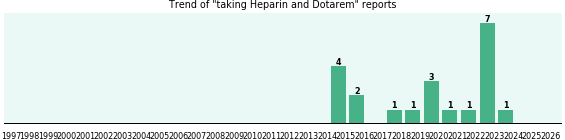
The phase IV clinical study analyzes what interactions people have when they take Heparin and Dotarem. It is created by eHealthMe based on reports of 21 people who take the same drugs from the FDA, and is updated regularly.
What is Heparin?
Heparin has active ingredients of heparin sodium. It is often used in blood clots. eHealthMe is studying from 92,141 Heparin users. Check the latest studies of Heparin.
What is Dotarem?
Dotarem has active ingredients of gadoterate meglumine. eHealthMe is studying from 2,749 Dotarem users. Check the latest studies of Dotarem.
21 people who take Heparin and Dotarem together, and have interactions are studied.
What are the common drug interactions of Heparin and Dotarem, by gender? *:
female:
- Bacteraemia (presence of bacteria in the blood)
- Device failure
- Hypoglycaemia (deficiency of glucose in the bloodstream)
- Hypotension (abnormally low blood pressure)
- Small intestinal obstruction (blockage in small intestine)
- Cytokine release syndrome (immediate complication occurring with the use of anti-t cell antibody infusions)
- Abdominal pain
- Blast cell count increased
- Headache (pain in head)
- Hypokalaemia (low potassium)
male:
- Seizure (abnormal excessive or synchronous neuronal activity in the brain)
- Pyrexia (fever)
- Gastrointestinal haemorrhage (bleeding gastrointestinal tract)
- Haematuria (presence of blood in urine)
- Hyperkalaemia (damage to or disease of the kidney)
- Hyperphosphataemia (electrolyte disturbance in which there is an abnormally elevated level of phosphate in the blood)
- Hypocalcaemia (levels of calcium in blood serum are abnormally low)
- Hypotension (abnormally low blood pressure)
- Hypoxia (low oxygen in tissues)
- Melaena (the passage of black, tarry stools)
What are the common drug interactions of Heparin and Dotarem, by age (0-1 to 60+)? *:
0-1:
- Deep vein thrombosis (blood clot in a major vein that usually develops in the legs and/or pelvis)
- Pneumatosis intestinalis (air or gas in an intestine)
2-9:
n/a
10-19:
- Seizure (abnormal excessive or synchronous neuronal activity in the brain)
- Acute lymphocytic leukaemia recurrent (cancer in which the bone marrow makes too many lymphocytes-recurrent)
- Blood creatinine increased
- Blood lactic acid increased
- Blood urea increased
- Bone marrow failure
- Bradycardia (abnormally slow heart action)
- Cytokine release syndrome (immediate complication occurring with the use of anti-t cell antibody infusions)
- Cytokine storm (over-protective immune response that can actually be fatal)
- Gastrointestinal haemorrhage (bleeding gastrointestinal tract)
20-29:
- Cytokine release syndrome (immediate complication occurring with the use of anti-t cell antibody infusions)
30-39:
n/a
40-49:
- Cytokine release syndrome (immediate complication occurring with the use of anti-t cell antibody infusions)
- Neurotoxicity (when the exposure to natural or artificial toxic substances, which are called neurotoxins, alters the normal activity of the nervous system)
50-59:
- Acute respiratory failure
- Adenovirus infection
60+:
- Bacteraemia (presence of bacteria in the blood)
- Device failure
- Pyrexia (fever)
- Eosinophilia (eosinophil count in the peripheral blood exceeds)
- Hypoglycaemia (deficiency of glucose in the bloodstream)
- Hypotension (abnormally low blood pressure)
- Rash
- Small intestinal obstruction (blockage in small intestine)
- Abdominal pain
- Abscess limb (limb infection)
What are the existing conditions these people have? *
- Constipation: 7 people, 33.33%
- Fever: 6 people, 28.57%
- Nausea And Vomiting: 6 people, 28.57%
- Pain: 5 people, 23.81%
- Depression: 5 people, 23.81%
- Nervous System Disorder (a general class of medical conditions affecting the nervous system): 5 people, 23.81%
- Nausea (feeling of having an urge to vomit): 5 people, 23.81%
- Atrial Fibrillation/flutter (atrial fibrillation and flutter are abnormal heart rhythms in which the atria, or upper chambers of the heart, are out of sync with the ventricles): 4 people, 19.05%
- Acute Myeloid Leukaemia (acute cancer in which the bone marrow makes abnormal myeloblasts): 4 people, 19.05%
- Diabetes: 4 people, 19.05%
* Approximation only. Some reports may have incomplete information.
Do you take Heparin and Dotarem?
- Personalize this study to your gender, age, symptoms and drugs
- Predict drug outcomes for up to one year with AI
- Get an AI agent to monitor your drugs continuously
Related studies:
Effectiveness of, side effects of, and alternative drugs to the 2 drugs:
Browse all drug interactions of Heparin and Dotarem:
a b c d e f g h i j k l m n o p q r s t u v w x y zSub-studies by gender and age:
Female: 0-1 2-9 10-19 20-29 30-39 40-49 50-59 60+
Male: 0-1 2-9 10-19 20-29 30-39 40-49 50-59 60+
Browse all side effects of Heparin:
a b c d e f g h i j k l m n o p q r s t u v w x y zBrowse all side effects of Dotarem:
a b c d e f g h i j k l m n o p q r s t u v w x y zBrowse all interactions between Heparin and drugs from A to Z:
a b c d e f g h i j k l m n o p q r s t u v w x y zBrowse all interactions between Dotarem and drugs from A to Z:
a b c d e f g h i j k l m n o p q r s t u v w x y zHow the study uses the data?
The study uses data from the FDA. It is based on heparin sodium and gadoterate meglumine (the active ingredients of Heparin and Dotarem, respectively), and Heparin and Dotarem (the brand names). Other drugs that have the same active ingredients (e.g. generic drugs) are not considered. Dosage of drugs is not considered in the study.
How to use the study?
DO NOT STOP MEDICATIONS without first consulting your doctor. If there are any serious or long term adverse effects discovered in the study, discuss the study with your doctor to ensure that proper medication management will be in place if applicable.
Who is eHealthMe?
With medical big data and proven AI/ML algorithms, eHealthMe provides a platform for everyone to run phase IV clinical trials. We study millions of patients and 5,000 more each day. Results of our real-world drug study have been referenced on 800+ peer-reviewed medical publications, including The Lancet, Mayo Clinic Proceedings, and Nature. Our analysis results are available to researchers, health care professionals, patients (testimonials), and software developers (open API).
WARNING, DISCLAIMER, USE FOR PUBLICATION
WARNING: Please DO NOT STOP MEDICATIONS without first consulting a physician since doing so could be hazardous to your health.
DISCLAIMER: All material available on eHealthMe.com is for informational purposes only, and is not a substitute for medical advice, diagnosis, or treatment provided by a qualified healthcare provider. All information is observation-only. Our phase IV clinical studies alone cannot establish cause-effect relationship. Different individuals may respond to medication in different ways. Every effort has been made to ensure that all information is accurate, up-to-date, and complete, but no guarantee is made to that effect. The use of the eHealthMe site and its content is at your own risk.
If you use this eHealthMe study on publication, please acknowledge it with a citation: study title, URL, accessed date.
Recent studies on eHealthMe:
- Cognitive Disorder and Pollakiuria - 8 seconds ago
- Could Ditropan Xl cause Pneumonia Aspiration? - 27 seconds ago
- Could Olanzapine cause Macrocytosis? - a minute ago
- Vitamin Supplementation and Pneumonia Aspiration - a minute ago
- Could Xeloda cause Ankylosing Spondylitis? - a minute ago
- Drug interactions of Acth and Valium - a minute ago
- Could Accutane cause Taste - Impaired? - 2 minutes ago
- Could Uloric cause Rash Papular? - 2 minutes ago
- Nasacort Aq vs. Azelastine, side effect and effectiveness comparison - 2 minutes ago
- Drug interactions of Cortisone Acetate and Vitamin B - 2 minutes ago