Metformin and Lidocaine viscous drug interactions - a phase IV clinical study of FDA data
Summary:
Drug interactions are reported among people who take Metformin (metformin hydrochloride) and Lidocaine viscous (lidocaine hydrochloride). Common drug interactions include fatigue among females and pneumonia among males.
The phase IV clinical study analyzes what interactions people have when they take Metformin and Lidocaine viscous. It is created by eHealthMe based on reports of 68 people who take the same drugs from the FDA, and is updated regularly.
What is Metformin?
Metformin has active ingredients of metformin hydrochloride. It is often used in diabetes. eHealthMe is studying from 465,354 Metformin users. Check the latest studies of Metformin.
What is Lidocaine viscous?
Lidocaine viscous has active ingredients of lidocaine hydrochloride. eHealthMe is studying from 712 Lidocaine viscous users. Check the latest studies of Lidocaine viscous.
68 people who take Metformin and Lidocaine viscous together, and have interactions are studied.
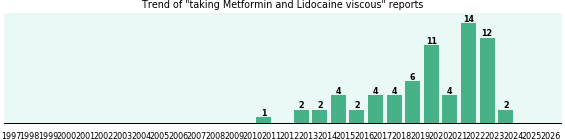
What are the common drug interactions of Metformin and Lidocaine Viscous, by gender? *:
female:
- Fatigue (feeling of tiredness)
- Fistula discharge (discharge from abnormal passage of structure/organ)
- Gastrointestinal haemorrhage (bleeding gastrointestinal tract)
- Haemorrhage (bleeding)
- Headache (pain in head)
- Herpes zoster
- Iron deficiency anaemia
- Mucosal inflammation (infection of mucous membrane)
- Neuralgia (pain in one or more nerves)
- Platelet count decreased
male:
- Pneumonia
- Pain
- Glomerulonephritis minimal lesion (a disease of the kidney that causes nephrotic syndrome and usually affects children)
- Headache (pain in head)
- Tubulointerstitial nephritis (a form of nephritis affecting the interstitium of the kidneys surrounding the tubules)
- Anhedonia (inability to experience pleasure from activities usually found enjoyable)
- Bone density decreased
- Cardiac failure congestive
- Dehydration (dryness resulting from the removal of water)
- Diarrhoea
What are the common drug interactions of Metformin and Lidocaine Viscous, by age (0-1 to 60+)? *:
0-1:
n/a
2-9:
n/a
10-19:
n/a
20-29:
- Drug dependence
- Hallucination (an experience involving the perception of something not present)
- Hallucination, auditory (perceiving sounds without auditory stimulus)
- Pneumonia pneumococcal (pneumococcal pneumonia is a common but serious infection and inflammation of the lungs)
- Psychotic behaviour
- Rash
- Urticaria (rash of round, red welts on the skin that itch intensely)
30-39:
- Anhedonia (inability to experience pleasure from activities usually found enjoyable)
- Anxiety
- Bone density decreased
- Emotional distress
- Pain
40-49:
- Fatigue (feeling of tiredness)
- Abdominal pain
- Blood magnesium decreased
- Blood potassium decreased
- Constipation
- Electrocardiogram qt prolonged
- Haematoma (collection of blood outside the blood vessels)
- Headache (pain in head)
- Intervertebral disc disorder (spinal disc disorder)
- Malaise (a feeling of general discomfort or uneasiness)
50-59:
- Anxiety
- Chronic kidney disease
- Convulsion (muscles contract and relax rapidly and repeatedly, resulting in an uncontrolled shaking of the body)
- Death
- Deep vein thrombosis (blood clot in a major vein that usually develops in the legs and/or pelvis)
- Dermal cyst
- Diarrhoea
- Dyspnoea (difficult or laboured respiration)
- Gait disturbance
- Generalised oedema (swelling all over the body)
60+:
- Pneumonia
- Chronic kidney disease
- Anaemia (lack of blood)
- Cardiac failure congestive
- Death
- Dehydration (dryness resulting from the removal of water)
- Drug ineffective
- Fatigue (feeling of tiredness)
- Gastrointestinal haemorrhage (bleeding gastrointestinal tract)
- Musculoskeletal pain (pain affects the bones, muscles, ligaments, tendons, and nerves)
What are the existing conditions these people have? *
- Pain: 12 people, 17.65%
- Gastroesophageal Reflux Disease (a condition in which stomach contents leak backward from the stomach into the oesophagus): 8 people, 11.76%
- Stress And Anxiety: 8 people, 11.76%
- Constipation: 8 people, 11.76%
- High Blood Pressure: 8 people, 11.76%
- Nausea (feeling of having an urge to vomit): 7 people, 10.29%
- Multiple Myeloma (cancer of the plasma cells): 7 people, 10.29%
- Type 2 Diabetes: 6 people, 8.82%
- Depression: 6 people, 8.82%
- Hypersensitivity: 6 people, 8.82%
* Approximation only. Some reports may have incomplete information.
Do you take Metformin and Lidocaine viscous?
- Personalize this study to your gender, age, symptoms and drugs
- Predict drug outcomes for up to one year with AI
- Get an AI agent to monitor your drugs continuously
Related studies:
Effectiveness of, side effects of, and alternative drugs to the 2 drugs:
- Metformin (465,354 reports)
- Lidocaine viscous (712 reports)
Browse all drug interactions of Metformin and Lidocaine viscous:
a b c d e f g h i j k l m n o p q r s t u v w x y zSub-studies by gender and age:
Female: 0-1 2-9 10-19 20-29 30-39 40-49 50-59 60+
Male: 0-1 2-9 10-19 20-29 30-39 40-49 50-59 60+
Browse all side effects of Metformin:
a b c d e f g h i j k l m n o p q r s t u v w x y zBrowse all side effects of Lidocaine viscous:
a b c d e f g h i j k l m n o p q r s t u v w x y zBrowse all interactions between Metformin and drugs from A to Z:
a b c d e f g h i j k l m n o p q r s t u v w x y zBrowse all interactions between Lidocaine viscous and drugs from A to Z:
a b c d e f g h i j k l m n o p q r s t u v w x y zRelated publications that referenced our studies
- T.Audi Yanto, I.Huang, F.Nathania Kosasih, NP Hardjo Lugito, "Nightmare and Abnormal Dreams: Rare Side Effects of Metformin?", Case Reports in Endocrinology, 2018 Jan .
- Al-Hamdy RA, "Assessment of electrolytes and HbA1c in type 2 diabetic patients using metformin and evaluation of guidelines obedience regarding renal impairment", J.Thi-Qar Sci., 2015 Jan .
- Wiwanitkit S, Wiwanitkit V, "Metformin and sleep disorders", Indian journal of endocrinology and metabolism, 2012 Jan .
- T.Audi Yanto, I.Huang, F.Nathania Kosasih, NP Hardjo Lugito, "Nightmare and Abnormal Dreams: Rare Side Effects of Metformin?", Case Reports in Endocrinology, 2018 Jan .
- Al-Hamdy RA, "Assessment of electrolytes and HbA1c in type 2 diabetic patients using metformin and evaluation of guidelines obedience regarding renal impairment", J.Thi-Qar Sci., 2015 Jan .
- Wiwanitkit S, Wiwanitkit V, "Metformin and sleep disorders", Indian journal of endocrinology and metabolism, 2012 Jan .
How the study uses the data?
The study uses data from the FDA. It is based on metformin hydrochloride and lidocaine hydrochloride (the active ingredients of Metformin and Lidocaine viscous, respectively), and Metformin and Lidocaine viscous (the brand names). Other drugs that have the same active ingredients (e.g. generic drugs) are not considered. Dosage of drugs is not considered in the study.
How to use the study?
DO NOT STOP MEDICATIONS without first consulting your doctor. If there are any serious or long term adverse effects discovered in the study, discuss the study with your doctor to ensure that proper medication management will be in place if applicable.
Who is eHealthMe?
With medical big data and proven AI/ML algorithms, eHealthMe provides a platform for everyone to run phase IV clinical trials. We study millions of patients and 5,000 more each day. Results of our real-world drug study have been referenced on 800+ peer-reviewed medical publications, including The Lancet, Mayo Clinic Proceedings, and Nature. Our analysis results are available to researchers, health care professionals, patients (testimonials), and software developers (open API).
WARNING, DISCLAIMER, USE FOR PUBLICATION
WARNING: Please DO NOT STOP MEDICATIONS without first consulting a physician since doing so could be hazardous to your health.
DISCLAIMER: All material available on eHealthMe.com is for informational purposes only, and is not a substitute for medical advice, diagnosis, or treatment provided by a qualified healthcare provider. All information is observation-only. Our phase IV clinical studies alone cannot establish cause-effect relationship. Different individuals may respond to medication in different ways. Every effort has been made to ensure that all information is accurate, up-to-date, and complete, but no guarantee is made to that effect. The use of the eHealthMe site and its content is at your own risk.
If you use this eHealthMe study on publication, please acknowledge it with a citation: study title, URL, accessed date.
Recent studies on eHealthMe:
- Drug interactions of Granisetron Hydrochloride and Ativan - 7 seconds ago
- Drug interactions of Novolog and Remeron - 9 seconds ago
- Lung Neoplasm Malignant and Stress And Anxiety - 12 seconds ago
- Could Fluoxetine cause Hyperreflexia? - 13 seconds ago
- Could Vitamin B12 cause White Blood Cell Count Increased? - 17 seconds ago
- Could Heparin cause Areflexia? - 21 seconds ago
- Drug interactions of Acyclovir and Olanzapine - 24 seconds ago
- Drug interactions of Xylit and Famotidine - 24 seconds ago
- Could Emla cause Injection Site Swelling? - 28 seconds ago
- Could Sulfasalazine cause Rales? - 29 seconds ago