Nubain and Fungizone drug interactions - a phase IV clinical study of FDA data
Summary:
Drug interactions are reported among people who take Nubain (nalbuphine hydrochloride) and Fungizone (amphotericin b). Common drug interactions include seizure among females and acute respiratory distress syndrome among males.
The phase IV clinical study analyzes what interactions people have when they take Nubain and Fungizone. It is created by eHealthMe based on reports of 27 people who take the same drugs from the FDA, and is updated regularly.
What is Nubain?
Nubain has active ingredients of nalbuphine hydrochloride. It is often used in pain. eHealthMe is studying from 1,749 Nubain users. Check the latest studies of Nubain.
What is Fungizone?
Fungizone has active ingredients of amphotericin b. eHealthMe is studying from 4,456 Fungizone users. Check the latest studies of Fungizone.
27 people who take Nubain and Fungizone together, and have interactions are studied.
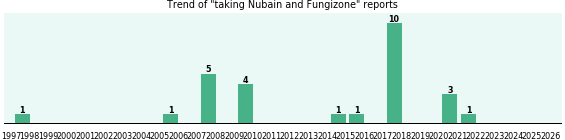
What are the common drug interactions of Nubain and Fungizone, by gender? *:
female:
- Seizure (abnormal excessive or synchronous neuronal activity in the brain)
- Retinal detachment (a disorder of the eye in which the retina peels away from its underlying layer of support tissue)
- Agitation (state of anxiety or nervous excitement)
- Aplasia (defective development or congenital absence of an organ or tissue)
- Arrhythmogenic right ventricular dysplasia (irregular heartbeat with right ventricular dysplasia)
- Cardiac arrest
- Cyanosis (lack of oxygen in body leads to blue appearance of skin ,mucous membrane nails)
- Graft versus host disease (the donated bone marrow or stem cells view the recipient's body as foreign, and the donated cells/bone marrow attack the body)
- Headache (pain in head)
- Hepatomegaly (abnormal enlargement of the liver)
male:
- Acute respiratory distress syndrome
- Toxoplasmosis (a parasitic disease caused by the protozoan toxoplasma gondii)
- Ocular discomfort (a generic expression when there is lack of ease in/about the eyes)
- Oral disorder (mouth disease)
- Pruritus (severe itching of the skin)
- Rash
- Skin disorder (skin disease)
- Anaemia (lack of blood)
- Bronchopneumonia (inflammation of the lungs, arising in the bronchi or bronchioles)
- Cough
What are the common drug interactions of Nubain and Fungizone, by age (0-1 to 60+)? *:
0-1:
n/a
2-9:
- Seizure (abnormal excessive or synchronous neuronal activity in the brain)
- Muscle weakness (a lack of muscle strength)
- Pain in limb
- Peripheral neuropathy (damage to nerves of the peripheral nervous system)
10-19:
- Face oedema (swelling of face)
- Graft versus host disease (the donated bone marrow or stem cells view the recipient's body as foreign, and the donated cells/bone marrow attack the body)
- Ocular discomfort (a generic expression when there is lack of ease in/about the eyes)
- Oral disorder (mouth disease)
- Pruritus (severe itching of the skin)
- Pulmonary oedema (fluid accumulation in the lungs)
- Rash
- Skin disorder (skin disease)
- Acute respiratory distress syndrome
- Agitation (state of anxiety or nervous excitement)
20-29:
n/a
30-39:
n/a
40-49:
n/a
50-59:
n/a
60+:
n/a
What are the existing conditions these people have? *
- Acute Lymphocytic Leukemia (All) (cancer of the white blood cells characterized by excess lymphoblasts): 14 people, 51.85%
- Stress And Anxiety: 9 people, 33.33%
- Procedural Pain: 8 people, 29.63%
- Neuropathy Peripheral (surface nerve damage): 8 people, 29.63%
- Neuralgia (pain in one or more nerves): 8 people, 29.63%
- Antithrombin Iii Deficiency (rare hereditary disorder that generally comes to light when a patient suffers recurrent venous thrombosis and pulmonary embolism, and repetitive intrauterine fetal death (iufd)): 8 people, 29.63%
- Agranulocytosis (a deficiency of granulocytes in the blood, causing increased vulnerability to infection): 4 people, 14.81%
- Graft Versus Host Disease (the donated bone marrow or stem cells view the recipient's body as foreign, and the donated cells/bone marrow attack the body): 2 people, 7.41%
- Constipation: 2 people, 7.41%
* Approximation only. Some reports may have incomplete information.
Do you take Nubain and Fungizone?
- Personalize this study to your gender, age, symptoms and drugs
- Predict drug outcomes for up to one year with AI
- Get an AI agent to monitor your drugs continuously
Related studies:
Effectiveness of, side effects of, and alternative drugs to the 2 drugs:
Browse all drug interactions of Nubain and Fungizone:
a b c d e f g h i j k l m n o p q r s t u v w x y zSub-studies by gender and age:
Female: 0-1 2-9 10-19 20-29 30-39 40-49 50-59 60+
Male: 0-1 2-9 10-19 20-29 30-39 40-49 50-59 60+
Browse all side effects of Nubain:
a b c d e f g h i j k l m n o p q r s t u v w x y zBrowse all side effects of Fungizone:
a b c d e f g h i j k l m n o p q r s t u v w x y zBrowse all interactions between Nubain and drugs from A to Z:
a b c d e f g h i j k l m n o p q r s t u v w x y zBrowse all interactions between Fungizone and drugs from A to Z:
a b c d e f g h i j k l m n o p q r s t u v w x y zHow the study uses the data?
The study uses data from the FDA. It is based on nalbuphine hydrochloride and amphotericin b (the active ingredients of Nubain and Fungizone, respectively), and Nubain and Fungizone (the brand names). Other drugs that have the same active ingredients (e.g. generic drugs) are not considered. Dosage of drugs is not considered in the study.
How to use the study?
DO NOT STOP MEDICATIONS without first consulting your doctor. If there are any serious or long term adverse effects discovered in the study, discuss the study with your doctor to ensure that proper medication management will be in place if applicable.
Who is eHealthMe?
With medical big data and proven AI/ML algorithms, eHealthMe provides a platform for everyone to run phase IV clinical trials. We study millions of patients and 5,000 more each day. Results of our real-world drug study have been referenced on 800+ peer-reviewed medical publications, including The Lancet, Mayo Clinic Proceedings, and Nature. Our analysis results are available to researchers, health care professionals, patients (testimonials), and software developers (open API).
WARNING, DISCLAIMER, USE FOR PUBLICATION
WARNING: Please DO NOT STOP MEDICATIONS without first consulting a physician since doing so could be hazardous to your health.
DISCLAIMER: All material available on eHealthMe.com is for informational purposes only, and is not a substitute for medical advice, diagnosis, or treatment provided by a qualified healthcare provider. All information is observation-only. Our phase IV clinical studies alone cannot establish cause-effect relationship. Different individuals may respond to medication in different ways. Every effort has been made to ensure that all information is accurate, up-to-date, and complete, but no guarantee is made to that effect. The use of the eHealthMe site and its content is at your own risk.
If you use this eHealthMe study on publication, please acknowledge it with a citation: study title, URL, accessed date.
Recent studies on eHealthMe:
- Could Ofev cause Suicidal Ideation? - a second ago
- Drug interactions of Morphine Sulfate and Enoxaparin Sodium - 6 seconds ago
- Could Azacitidine cause Hip Fracture? - 10 seconds ago
- Could Allopurinol cause Raynaud'S Phenomenon? - 32 seconds ago
- Drug interactions of Morphine Sulfate and Pataday - 33 seconds ago
- Could Cilostazol cause Blood Creatinine Increased? - 33 seconds ago
- Drug interactions of Aimovig and Atacand - 34 seconds ago
- Could Methylprednisolone cause Arthropathy? - 38 seconds ago
- Drug interactions of Ziprasidone Hydrochloride and Fluticasone Propionate - 45 seconds ago
- Could Trimethoprim cause Haematotoxicity? - 45 seconds ago