Adderall and Altace drug interactions - a phase IV clinical study of FDA data
Summary:
Drug interactions are reported among people who take Adderall (amphetamine aspartate; amphetamine sulfate; dextroamphetamine saccharate; dextroamphetamine sulfate) and Altace (ramipril). Common drug interactions include nausea among females and somnolence among males.
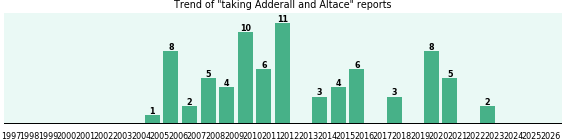
The phase IV clinical study analyzes what interactions people have when they take Adderall and Altace. It is created by eHealthMe based on reports of 78 people who take the same drugs from the FDA, and is updated regularly.
What is Adderall?
Adderall has active ingredients of amphetamine aspartate; amphetamine sulfate; dextroamphetamine saccharate; dextroamphetamine sulfate. It is often used in attention deficit hyperactivity disorder. eHealthMe is studying from 64,224 Adderall users. Check the latest studies of Adderall.
What is Altace?
Altace has active ingredients of ramipril. It is often used in high blood pressure. eHealthMe is studying from 23,681 Altace users. Check the latest studies of Altace.
78 people who take Adderall and Altace together, and have interactions are studied.
What are the common drug interactions of Adderall and Altace, by gender? *:
female:
- Nausea (feeling of having an urge to vomit)
- Abscess (pus)
- Anhedonia (inability to experience pleasure from activities usually found enjoyable)
- Bronchopleural fistula
- Cardiomegaly (increased size of heart than normal)
- Cerebrovascular disorder (disease of brain)
- Cervical spinal stenosis (narrowing of the spinal canal in the neck)
- Chest pain
- Cyst (a closed sac)
- Emphysema (chronic respiratory disease - over inflation of the air sacs (alveoli) in the lungs)
male:
- Somnolence (a state of near-sleep, a strong desire for sleep)
- Compulsions (performing an act persistently and repetitively)
- Multi-organ failure (multisystem organ failure)
- Fatigue (feeling of tiredness)
- Chills (felling of cold)
- Gastrointestinal disorder (functional problems of gastrointestinal tract)
- Malaise (a feeling of general discomfort or uneasiness)
- Photosensitivity reaction
- Visual impairment
- Dizziness
What are the common drug interactions of Adderall and Altace, by age (0-1 to 60+)? *:
0-1:
n/a
2-9:
n/a
10-19:
- Cardiopulmonary failure (cessation of normal circulation of the blood due to failure of the heart to contract)
- Compulsions (performing an act persistently and repetitively)
- Hyperglycaemia (high blood sugar)
- Multi-organ failure (multisystem organ failure)
- Psychomotor hyperactivity (feelings of extreme restlessness)
- Somnolence (a state of near-sleep, a strong desire for sleep)
- Thirst
20-29:
- Impaired gastric emptying
- Nasopharyngitis (inflammation of the nasopharynx)
- Oesophagitis (inflammation of oesophagus)
- Weight decreased
- Angina pectoris (chest pain due to ischemia of the heart muscle)
- Coronary arterial stent insertion
- Dizziness
- Fatigue (feeling of tiredness)
- Gastrooesophageal reflux disease (stomach contents (food or liquid) leak backwards from the stomach into the oesophagus)
- Initial insomnia (feeling of inadequate or poor-quality sleep)
30-39:
n/a
40-49:
- Anxiety
- Chronic kidney disease
- Renal failure (kidney dysfunction)
- Suicidal ideation
- Deep vein thrombosis (blood clot in a major vein that usually develops in the legs and/or pelvis)
- Fatigue (feeling of tiredness)
- Fungal infection
- Injection site pain
- Mobility decreased (ability to move is reduced)
- Pulmonary embolism (blockage of the main artery of the lung)
50-59:
- Metastases to lymph nodes (cancer spreads to lymph node)
- Musculoskeletal chest pain (pain in chest muscle or nerve or bones)
- Osteonecrosis of jaw (death of bone of jaw)
- Rhinitis (a medical term for irritation and inflammation of the mucous membrane inside the nose)
- Upper-airway cough syndrome
- Wheezing (a high-pitched whistling sound made while you breath)
- Blood urea nitrogen/creatinine ratio increased
- Diverticulum intestinal (a pouch that is attached to the first part of the small intestine)
- Menopause (end of monthly cycles in women)
- Osteopenia (a condition where bone mineral density is lower than normal)
60+:
- Fatigue (feeling of tiredness)
- Malaise (a feeling of general discomfort or uneasiness)
- Visual impairment
- Dizziness
- Drug intolerance (drug sensitivity)
- Erythema (redness of the skin)
- Skin exfoliation (removal of the oldest dead skin cells)
- Skin hyperpigmentation (disorders affect the colour of your skin)
- Chronic kidney disease
- Deep vein thrombosis (blood clot in a major vein that usually develops in the legs and/or pelvis)
What are the existing conditions these people have? *
- Narcolepsy (brain's inability to regulate sleep-wake cycles normally): 17 people, 21.79%
- Bone Density Abnormal: 16 people, 20.51%
- Cataplexy (loss of muscle tone accompanied by full conscious awareness): 12 people, 15.38%
- High Blood Cholesterol: 12 people, 15.38%
- Depression: 10 people, 12.82%
- Aggression: 9 people, 11.54%
- Fungal Infection: 9 people, 11.54%
- Sleep Apnea Syndrome: 7 people, 8.97%
- Constipation: 7 people, 8.97%
- Oesophageal Spasm (contraction of oesophagus): 6 people, 7.69%
* Approximation only. Some reports may have incomplete information.
Do you take Adderall and Altace?
- Personalize this study to your gender, age, symptoms and drugs
- Predict drug outcomes for up to one year with AI
- Get an AI agent to monitor your drugs continuously
Related studies:
Effectiveness of, side effects of, and alternative drugs to the 2 drugs:
Browse all drug interactions of Adderall and Altace:
a b c d e f g h i j k l m n o p q r s t u v w x y zSub-studies by gender and age:
Female: 0-1 2-9 10-19 20-29 30-39 40-49 50-59 60+
Male: 0-1 2-9 10-19 20-29 30-39 40-49 50-59 60+
Browse all side effects of Adderall:
a b c d e f g h i j k l m n o p q r s t u v w x y zBrowse all side effects of Altace:
a b c d e f g h i j k l m n o p q r s t u v w x y zBrowse all interactions between Adderall and drugs from A to Z:
a b c d e f g h i j k l m n o p q r s t u v w x y zBrowse all interactions between Altace and drugs from A to Z:
a b c d e f g h i j k l m n o p q r s t u v w x y zHow the study uses the data?
The study uses data from the FDA. It is based on amphetamine aspartate; amphetamine sulfate; dextroamphetamine saccharate; dextroamphetamine sulfate and ramipril (the active ingredients of Adderall and Altace, respectively), and Adderall and Altace (the brand names). Other drugs that have the same active ingredients (e.g. generic drugs) are not considered. Dosage of drugs is not considered in the study.
How to use the study?
DO NOT STOP MEDICATIONS without first consulting your doctor. If there are any serious or long term adverse effects discovered in the study, discuss the study with your doctor to ensure that proper medication management will be in place if applicable.
Who is eHealthMe?
With medical big data and proven AI/ML algorithms, eHealthMe provides a platform for everyone to run phase IV clinical trials. We study millions of patients and 5,000 more each day. Results of our real-world drug study have been referenced on 800+ peer-reviewed medical publications, including The Lancet, Mayo Clinic Proceedings, and Nature. Our analysis results are available to researchers, health care professionals, patients (testimonials), and software developers (open API).
WARNING, DISCLAIMER, USE FOR PUBLICATION
WARNING: Please DO NOT STOP MEDICATIONS without first consulting a physician since doing so could be hazardous to your health.
DISCLAIMER: All material available on eHealthMe.com is for informational purposes only, and is not a substitute for medical advice, diagnosis, or treatment provided by a qualified healthcare provider. All information is observation-only. Our phase IV clinical studies alone cannot establish cause-effect relationship. Different individuals may respond to medication in different ways. Every effort has been made to ensure that all information is accurate, up-to-date, and complete, but no guarantee is made to that effect. The use of the eHealthMe site and its content is at your own risk.
If you use this eHealthMe study on publication, please acknowledge it with a citation: study title, URL, accessed date.
Recent studies on eHealthMe:
- Drug interactions of Cefotaxime Sodium and Valacyclovir Hydrochloride - 4 seconds ago
- Prevacid vs. Famotidine, side effect and effectiveness comparison - 31 seconds ago
- Could Tamsulosin cause Paroxysmal Supraventricular Tachycardia? - 40 seconds ago
- Could Raptiva cause Gallstones? - 42 seconds ago
- Could Viibryd cause Memory Loss? - 44 seconds ago
- Could Fml cause Stress And Anxiety? - 52 seconds ago
- Drug interactions of Edoxaban and Eplerenone - a minute ago
- Could Darvocet cause Drug Administration Error? - a minute ago
- Could Oxycodone Hydrochloride And Acetaminophen cause Weight Increased? - a minute ago
- Methadose vs. Dilaudid, side effect and effectiveness comparison - a minute ago