Allegra and Desloratadine drug interactions - a phase IV clinical study of FDA data
Summary:
Drug interactions are reported among people who take Allegra (fexofenadine hydrochloride) and Desloratadine (desloratadine). Common drug interactions include infusion site haemorrhage among females and blood cholesterol increased among males.
The phase IV clinical study analyzes what interactions people have when they take Allegra and Desloratadine. It is created by eHealthMe based on reports of 31 people who take the same drugs from the FDA, and is updated regularly.
What is Allegra?
Allegra has active ingredients of fexofenadine hydrochloride. It is often used in allergies. eHealthMe is studying from 75,498 Allegra users. Check the latest studies of Allegra.
What is Desloratadine?
Desloratadine has active ingredients of desloratadine. It is often used in allergies. eHealthMe is studying from 4,207 Desloratadine users. Check the latest studies of Desloratadine.
eHealthMe: drug outcomes in the real world
eHealthMe runs one of the largest post-marketing drug safety studies in the world. We study millions of patients and 5,000 more each day. Our data-driven phase IV clinical trials have been referenced on 800+ peer-reviewed medical publications including The Lancet, Mayo Clinic Proceedings, and Nature. Tools to study our phase IV findings are available to the public, anonymous and free >>>.
31 people who take Allegra and Desloratadine together, and have interactions are studied.
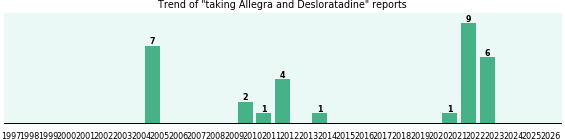
What are the common drug interactions of Allegra and Desloratadine, by gender? *:
female:
- Infusion site haemorrhage (bleeding from infusion site)
- Infusion site hypersensitivity
- Infusion site pruritus (severe itching at infusion site)
- Infusion site reaction
- Infusion site swelling
- Laryngitis (inflammation of the larynx)
- Musculoskeletal discomfort (discomfort in the body's muscles, joints, tendons, ligaments and nerves)
- Nasopharyngitis (inflammation of the nasopharynx)
- Ocular discomfort (a generic expression when there is lack of ease in/about the eyes)
- Sinus headache (headache caused by sinus infections)
male:
- Blood cholesterol increased
- Blood triglycerides increased
- Oedema peripheral (superficial swelling)
- Pain in extremity
- Pulmonary mass
- Pulmonary oedema (fluid accumulation in the lungs)
- Sinus disorder (disease of sinus)
- Abdominal pain
- Blood creatinine increased
- Disseminated intravascular coagulation (systemic activation of blood coagulation)
What are the common drug interactions of Allegra and Desloratadine, by age (0-1 to 60+)? *:
0-1:
n/a
2-9:
n/a
10-19:
- Abdominal pain
- Alanine aminotransferase increased
- Aspartate aminotransferase increased
- Bilirubin conjugated increased
- Blood bilirubin increased
- Blood bilirubin unconjugated increased
- C-reactive protein increased
- Fatigue (feeling of tiredness)
- Gastrointestinal disorder (functional problems of gastrointestinal tract)
- Liver injury
20-29:
- Affective disorder (mental disorder)
- Attention deficit hyperactivity disorder (a chronic condition including attention difficulty, hyperactivity, and impulsiveness)
- Body temperature increased
- Drug hypersensitivity
- Drug ineffective
- Endometriosis (appearance of endometrial tissue outside the uterus and causing pelvic pain)
- Mood swings (an extreme or rapid change in mood)
- Pruritus (severe itching of the skin)
- Urticaria (rash of round, red welts on the skin that itch intensely)
- Angioedema (rapid swelling of the dermis)
30-39:
- Blood cholesterol increased
- Blood triglycerides increased
- Diabetes mellitus non-insulin-dependent
- Erectile dysfunction
- Headache (pain in head)
- Myocardial infarction (destruction of heart tissue resulting from obstruction of the blood supply to the heart muscle)
- Weight increased
- Back pain
- Cellulitis (infection under the skin)
- Gastrooesophageal reflux disease (stomach contents (food or liquid) leak backwards from the stomach into the oesophagus)
40-49:
- Loss of consciousness
- Malaise (a feeling of general discomfort or uneasiness)
- Menorrhagia (an abnormally heavy bleeding and prolonged menstrual period at regular intervals)
- Nephrogenic anaemia (anaemia due to kidney disease)
- Pneumonia aspiration (bronchopneumonia that develops due to the entrance of foreign materials into the bronchial tree)
- Renal failure (kidney dysfunction)
- Somnolence (a state of near-sleep, a strong desire for sleep)
- Suicide attempt
- Weight increased
- Fall
50-59:
- Infusion site pain
- Multiple allergies (allergy to multiple agents)
- Asthma
- Headache (pain in head)
- Pulmonary mass
- Pulmonary oedema (fluid accumulation in the lungs)
- Abdominal discomfort
- Abdominal pain upper
- Abdominal tenderness
- Blood creatinine increased
60+:
- Heart rate increased
- Asthenia (weakness)
- Blood pressure increased
- Cerebral disorder (brain disease)
- Drug ineffective
- Dysgeusia (disorder of the sense of taste)
- Middle insomnia (difficulty returning to sleep after awakening either in the middle of the night)
- Nervousness
- Psychomotor hyperactivity (feelings of extreme restlessness)
What are the existing conditions these people have? *
- Insomnia (sleeplessness): 7 people, 22.58%
- Seasonal Allergy (allergic condition due to certain season): 4 people, 12.90%
- Rheumatoid Arthritis (a chronic progressive disease causing inflammation in the joints): 4 people, 12.90%
- Immunodeficiency Common Variable: 4 people, 12.90%
- Asthma: 4 people, 12.90%
- Migraine (headache): 3 people, 9.68%
- Stress And Anxiety: 2 people, 6.45%
- Schizophrenia (a mental disorder characterized by a breakdown of thought processes): 2 people, 6.45%
- Primary Immunodeficiency Syndrome: 2 people, 6.45%
- Hypersensitivity: 2 people, 6.45%
* Approximation only. Some reports may have incomplete information.
Do you take Allegra and Desloratadine?
- Personalize this study to your gender, age, symptoms and drugs
- Predict drug outcomes for up to one year with AI
- Get an AI agent to monitor your drugs continuously
Related studies:
Effectiveness of, side effects of, and alternative drugs to the 2 drugs:
- Allegra (75,498 reports)
- Desloratadine (4,207 reports)
Browse all drug interactions of Allegra and Desloratadine:
a b c d e f g h i j k l m n o p q r s t u v w x y zSub-studies by gender and age:
Female: 0-1 2-9 10-19 20-29 30-39 40-49 50-59 60+
Male: 0-1 2-9 10-19 20-29 30-39 40-49 50-59 60+
Browse all side effects of Allegra:
a b c d e f g h i j k l m n o p q r s t u v w x y zBrowse all side effects of Desloratadine:
a b c d e f g h i j k l m n o p q r s t u v w x y zBrowse all interactions between Allegra and drugs from A to Z:
a b c d e f g h i j k l m n o p q r s t u v w x y zBrowse all interactions between Desloratadine and drugs from A to Z:
a b c d e f g h i j k l m n o p q r s t u v w x y zHow the study uses the data?
The study uses data from the FDA. It is based on fexofenadine hydrochloride and desloratadine (the active ingredients of Allegra and Desloratadine, respectively), and Allegra and Desloratadine (the brand names). Other drugs that have the same active ingredients (e.g. generic drugs) are not considered. Dosage of drugs is not considered in the study.
How to use the study?
DO NOT STOP MEDICATIONS without first consulting your doctor. If there are any serious or long term adverse effects discovered in the study, discuss the study with your doctor to ensure that proper medication management will be in place if applicable.
Who is eHealthMe?
With medical big data and proven AI/ML algorithms, eHealthMe provides a platform for everyone to run phase IV clinical trials. We study millions of patients and 5,000 more each day. Results of our real-world drug study have been referenced on 800+ peer-reviewed medical publications, including The Lancet, Mayo Clinic Proceedings, and Nature. Our analysis results are available to researchers, health care professionals, patients (testimonials), and software developers (open API).
WARNING, DISCLAIMER, USE FOR PUBLICATION
WARNING: Please DO NOT STOP MEDICATIONS without first consulting a physician since doing so could be hazardous to your health.
DISCLAIMER: All material available on eHealthMe.com is for informational purposes only, and is not a substitute for medical advice, diagnosis, or treatment provided by a qualified healthcare provider. All information is observation-only. Our phase IV clinical studies alone cannot establish cause-effect relationship. Different individuals may respond to medication in different ways. Every effort has been made to ensure that all information is accurate, up-to-date, and complete, but no guarantee is made to that effect. The use of the eHealthMe site and its content is at your own risk.
If you use this eHealthMe study on publication, please acknowledge it with a citation: study title, URL, accessed date.
Recent studies on eHealthMe:
- Could Arimidex cause Pulmonary Hypertension? - a second ago
- Drug interactions of Amoxicillin and Atarax - a second ago
- Could Tamsulosin Hydrochloride cause Asthma Aggravated? - 7 seconds ago
- Could Tamiflu cause Abdominal Pain Aggravated? - 17 seconds ago
- Could Orencia cause Fracture Delayed Union? - 19 seconds ago
- Could Metoprolol Tartrate cause Swallowing Difficulty? - 26 seconds ago
- Could Bactrim Ds cause Gums - Swollen? - 26 seconds ago
- Drug interactions of Miralax and Aspirin - 28 seconds ago
- Could Bactrim Ds cause Appetite - Increased? - 29 seconds ago
- Could Tagamet cause Rashes? - 31 seconds ago