Dexchlorpheniramine maleate and Bactrim drug interactions - a phase IV clinical study of FDA data
Summary:
Drug interactions are reported among people who take Dexchlorpheniramine maleate (dexchlorpheniramine maleate) and Bactrim (sulfamethoxazole; trimethoprim). Common drug interactions include hyperlipidaemia among females and infusion related reaction among males.
The phase IV clinical study analyzes what interactions people have when they take Dexchlorpheniramine maleate and Bactrim. It is created by eHealthMe based on reports of 57 people who take the same drugs from the FDA, and is updated regularly.
What is Dexchlorpheniramine maleate?
Dexchlorpheniramine maleate has active ingredients of dexchlorpheniramine maleate. eHealthMe is studying from 1,509 Dexchlorpheniramine maleate users. Check the latest studies of Dexchlorpheniramine maleate.
What is Bactrim?
Bactrim has active ingredients of sulfamethoxazole; trimethoprim. It is often used in urinary tract infection. eHealthMe is studying from 89,117 Bactrim users. Check the latest studies of Bactrim.
57 people who take Dexchlorpheniramine maleate and Bactrim together, and have interactions are studied.
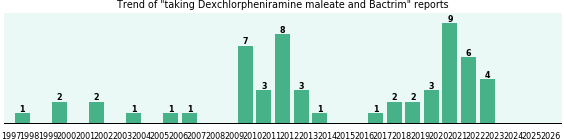
What are the common drug interactions of Dexchlorpheniramine Maleate and Bactrim, by gender? *:
female:
- Hyperlipidaemia (presence of excess lipids in the blood)
- Hypoglycaemia (deficiency of glucose in the bloodstream)
- Hypokalaemia (low potassium)
- Immune reconstitution syndrome (immune recovery syndrome)
- Lactic acidosis (low ph in body tissues)
- Lipodystrophy acquired (a regional loss of subcutaneous adipose tissue which usually starts in the face, extends downward acquired)
- Malnutrition (a condition that results from eating a diet in which certain nutrients are lacking)
- Neutrophil count increased (excess than normal number of neutrophil a type of blood cell)
- Oedema (fluid collection in tissue)
- Peritonitis (inflammation of the peritoneum, the thin tissue that lines the inner wall of the abdomen and covers most of the abdominal organs)
male:
- Infusion related reaction
- Dyspnoea (difficult or laboured respiration)
- Tumour lysis syndrome (a group of metabolic complications that can occur after treatment of cancer, these complications are caused by the breakdown products of dying cancer cells)
- Urticaria (rash of round, red welts on the skin that itch intensely)
- C-reactive protein increased
- Cardiac failure
- Cardiac valve disease (heart valve disease)
- Feeling hot
- Flushing (the warm, red condition of human skin)
- Hypotension (abnormally low blood pressure)
What are the common drug interactions of Dexchlorpheniramine Maleate and Bactrim, by age (0-1 to 60+)? *:
0-1:
n/a
2-9:
- Hypothermia (body temperature drops below the required temperature for normal metabolism and body functions)
- Leukopenia (less number of white blood cells in blood)
- Sepsis (a severe blood infection that can lead to organ failure and death)
10-19:
- Anaphylactic shock (severe and rapid and sometimes fatal hypersensitivity reaction to a substance)
- Diarrhoea
- Febrile neutropenia (fever with reduced white blood cells)
- Peritonitis (inflammation of the peritoneum, the thin tissue that lines the inner wall of the abdomen and covers most of the abdominal organs)
- Septic shock (shock due to blood infection)
20-29:
- Conjunctivitis (pink eye)
- Cystitis haemorrhagic (blood in the urine and painful voiding)
- Drug ineffective
- Electrocardiogram qt corrected interval prolonged
- Electrocardiogram qt prolonged
- Fungal sepsis (whole body infection by fungus)
- Hypokalaemia (low potassium)
- Malnutrition (a condition that results from eating a diet in which certain nutrients are lacking)
- Neutrophil count increased (excess than normal number of neutrophil a type of blood cell)
- Oedema (fluid collection in tissue)
30-39:
- Pulmonary hypertension (increase in blood pressure in the lung artery)
- Dermatitis (inflammation of the skin resulting from direct irritation by an external agent or an allergic reaction to it)
- Drug hypersensitivity
- Dyskinesia (abnormality or impairment of voluntary movement)
- Extrapyramidal disorder (involuntary muscle spasms in the face and neck)
- Pyrexia (fever)
40-49:
- Blood lactic acid increased
- Breast enlargement
- Dry skin
- Dyspnoea exertional (breathlessness or shortness of breath)
- Gammopathy (abnormal proliferation of the lymphoid cells producing immunoglobulins)
- Gastritis (inflammation of stomach)
- Hepatomegaly (abnormal enlargement of the liver)
- Hirsutism (abnormal growth of hair on a person's face and body, esp. on a woman)
- Hypercholesterolaemia (high levels of cholesterol in the blood)
- Hyperlipidaemia (presence of excess lipids in the blood)
50-59:
- Abdominal pain
- Decreased appetite
- Nausea (feeling of having an urge to vomit)
- Vomiting
- Dyspnoea (difficult or laboured respiration)
- Drug hypersensitivity
- Infusion related reaction
- Feeling hot
- Flushing (the warm, red condition of human skin)
- Hypotension (abnormally low blood pressure)
60+:
- Aplastic anaemia (blood disorder in which the body's bone marrow doesn't make enough new blood cells)
- Aspartate aminotransferase increased
- Bronchitis (inflammation of the mucous membrane in the bronchial tubes)
- C-reactive protein increased
- Cardiac disorder
- Cardiac failure
- Cardiac valve disease (heart valve disease)
- Febrile neutropenia (fever with reduced white blood cells)
- Multi-organ failure (multisystem organ failure)
- Pancytopenia (medical condition in which there is a reduction in the number of red and white blood cells, as well as platelets)
What are the existing conditions these people have? *
- Multiple Myeloma (cancer of the plasma cells): 7 people, 12.28%
- Chronic Lymphocytic Leukaemia (cancer in which the bone marrow makes too many lymphocytes (a type of white blood cell)): 6 people, 10.53%
- Hiv Infection: 5 people, 8.77%
- Burkitt Lymphoma (cancer of the lymphatic system): 5 people, 8.77%
- Agranulocytosis (a deficiency of granulocytes in the blood, causing increased vulnerability to infection): 5 people, 8.77%
- Waldenstrom's Macroglobulinaemia (cancer affects small lymphocytes (white blood cells)): 3 people, 5.26%
- Aplastic Anemia: 3 people, 5.26%
- Adverse Event: 3 people, 5.26%
* Approximation only. Some reports may have incomplete information.
Do you take Dexchlorpheniramine maleate and Bactrim?
- Personalize this study to your gender, age, symptoms and drugs
- Predict drug outcomes for up to one year with AI
- Get an AI agent to monitor your drugs continuously
Related studies:
Effectiveness of, side effects of, and alternative drugs to the 2 drugs:
- Dexchlorpheniramine maleate (1,509 reports)
- Bactrim (89,117 reports)
Browse all drug interactions of Dexchlorpheniramine maleate and Bactrim:
a b c d e f g h i j k l m n o p q r s t u v w x y zSub-studies by gender and age:
Female: 0-1 2-9 10-19 20-29 30-39 40-49 50-59 60+
Male: 0-1 2-9 10-19 20-29 30-39 40-49 50-59 60+
Browse all side effects of Dexchlorpheniramine maleate:
a b c d e f g h i j k l m n o p q r s t u v w x y zBrowse all side effects of Bactrim:
a b c d e f g h i j k l m n o p q r s t u v w x y zBrowse all interactions between Dexchlorpheniramine maleate and drugs from A to Z:
a b c d e f g h i j k l m n o p q r s t u v w x y zBrowse all interactions between Bactrim and drugs from A to Z:
a b c d e f g h i j k l m n o p q r s t u v w x y zHow the study uses the data?
The study uses data from the FDA. It is based on dexchlorpheniramine maleate and sulfamethoxazole; trimethoprim (the active ingredients of Dexchlorpheniramine maleate and Bactrim, respectively), and Dexchlorpheniramine maleate and Bactrim (the brand names). Other drugs that have the same active ingredients (e.g. generic drugs) are not considered. Dosage of drugs is not considered in the study.
How to use the study?
DO NOT STOP MEDICATIONS without first consulting your doctor. If there are any serious or long term adverse effects discovered in the study, discuss the study with your doctor to ensure that proper medication management will be in place if applicable.
Who is eHealthMe?
With medical big data and proven AI/ML algorithms, eHealthMe provides a platform for everyone to run phase IV clinical trials. We study millions of patients and 5,000 more each day. Results of our real-world drug study have been referenced on 800+ peer-reviewed medical publications, including The Lancet, Mayo Clinic Proceedings, and Nature. Our analysis results are available to researchers, health care professionals, patients (testimonials), and software developers (open API).
WARNING, DISCLAIMER, USE FOR PUBLICATION
WARNING: Please DO NOT STOP MEDICATIONS without first consulting a physician since doing so could be hazardous to your health.
DISCLAIMER: All material available on eHealthMe.com is for informational purposes only, and is not a substitute for medical advice, diagnosis, or treatment provided by a qualified healthcare provider. All information is observation-only. Our phase IV clinical studies alone cannot establish cause-effect relationship. Different individuals may respond to medication in different ways. Every effort has been made to ensure that all information is accurate, up-to-date, and complete, but no guarantee is made to that effect. The use of the eHealthMe site and its content is at your own risk.
If you use this eHealthMe study on publication, please acknowledge it with a citation: study title, URL, accessed date.
Recent studies on eHealthMe:
- Drug interactions of Janumet and Probiotic - a second ago
- Hydrocortisone Acetate vs. Canasa, side effect and effectiveness comparison - 4 seconds ago
- Could Carisoprodol cause Anxiety Aggravated? - 5 seconds ago
- Drug interactions of Vitamins and Fenofibric Acid - 11 seconds ago
- Drug interactions of Omacor and Nitrofurantoin - 14 seconds ago
- Could Lamotrigine cause Muscle Atrophy? - 15 seconds ago
- Nifedipine vs. Metformin, side effect and effectiveness comparison - 19 seconds ago
- Insulin Nordisk Mixtard vs. Lantus Solostar, side effect and effectiveness comparison - 30 seconds ago
- Drug interactions of Provigil and Amerge - 39 seconds ago
- Could Indomethacin cause Urinary Hesitation? - 41 seconds ago