Gabapentin and Zebeta drug interactions - a phase IV clinical study of FDA data
Summary:
Drug interactions are reported among people who take Gabapentin (gabapentin) and Zebeta (bisoprolol fumarate). Common drug interactions include areflexia among females and dehydration among males.
The phase IV clinical study analyzes what interactions people have when they take Gabapentin and Zebeta. It is created by eHealthMe based on reports of 94 people who take the same drugs from the FDA, and is updated regularly.
What is Gabapentin?
Gabapentin has active ingredients of gabapentin. It is often used in neuralgia. eHealthMe is studying from 322,983 Gabapentin users. Check the latest studies of Gabapentin.
What is Zebeta?
Zebeta has active ingredients of bisoprolol fumarate. It is often used in high blood pressure. eHealthMe is studying from 1,734 Zebeta users. Check the latest studies of Zebeta.
94 people who take Gabapentin and Zebeta together, and have interactions are studied.
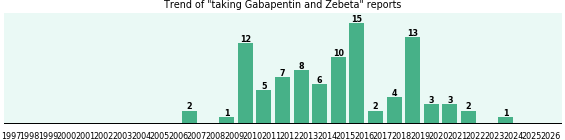
What are the common drug interactions of Gabapentin and Zebeta, by gender? *:
female:
- Areflexia (absence of a reflex)
- Back pain
- Bone disorder
- Constipation
- Eating disorder
- Emotional distress
- Exostosis (formation of new bone on the surface of a bone)
- Gingival pain (gum pain)
- Haemorrhoids (a swollen vein or group of veins in the region of the anus)
- Hypoaesthesia (reduced sense of touch or sensation)
male:
- Dehydration (dryness resulting from the removal of water)
- Pneumonitis (inflammation of the walls of the alveoli in the lungs)
- Metabolic acidosis (body produces too much acid, or when the kidneys are not removing enough acid from the body)
- Pneumonia
- Renal impairment (severely reduced kidney function)
- Adverse drug reaction
- Angiofibroma (small, reddish brown or even flesh-coloured, smooth, shiny, 0.1- to 0.3 cm papules present over the sides of the nose and the medial portions of the cheeks)
- Anxiety
- Areflexia (absence of a reflex)
- Arthralgia (joint pain)
What are the common drug interactions of Gabapentin and Zebeta, by age (0-1 to 60+)? *:
0-1:
n/a
2-9:
n/a
10-19:
n/a
20-29:
n/a
30-39:
- Arthritis (form of joint disorder that involves inflammation of one or more joints)
- Bronchitis (inflammation of the mucous membrane in the bronchial tubes)
- Cholelithiasis (the presence or formation of gallstones in the gallbladder or bile ducts)
- Deep vein thrombosis (blood clot in a major vein that usually develops in the legs and/or pelvis)
- Dizziness
- Glaucoma (increased fluid pressure in the eye with vision loss)
- Neuropathy peripheral (surface nerve damage)
- Osteoarthritis (a joint disease caused by cartilage loss in a joint)
- Purpura senile (skin condition in which areas of the skin develop a purplish or reddish-brown appearance due to bleeding of small blood vessels underneath)
- Renal failure (kidney dysfunction)
40-49:
- Nausea (feeling of having an urge to vomit)
- Dehydration (dryness resulting from the removal of water)
- Diabetes mellitus (diabetes, caused by a deficiency of the pancreatic hormone insulin)
- Leukocytosis (increased white blood cells)
- Vomiting
- Drug hypersensitivity
- Hyperhidrosis (abnormally increased sweating)
- Metabolic acidosis (body produces too much acid, or when the kidneys are not removing enough acid from the body)
- Renal impairment (severely reduced kidney function)
- Skin lesion
50-59:
- Rectal fissure (painful condition in which a cut or tear occurs in the anus)
- Seroma (a tumour like collection of serum in the tissues)
- Cellulitis (infection under the skin)
- Plantar fasciitis (painful inflammatory process of the plantar fascia)
- Purulent discharge (discharge that contains pus)
- Seborrhoeic keratosis (noncancerous (benign) skin growths that some people develop as they age. they often appear on the back or chest)
- Angiofibroma (small, reddish brown or even flesh-coloured, smooth, shiny, 0.1- to 0.3 cm papules present over the sides of the nose and the medial portions of the cheeks)
- Excessive granulation tissue (excessive collagen-rich tissue which forms at the site of an injury)
- Face injury
- Haemangioma (noncancerous, abnormally dense collections of dilated small blood vessels that may occur in the skin or internal organs)
60+:
- Cardiac arrest
- Chronic kidney disease
- Fluid retention (an abnormal accumulation of fluid in the blood)
- Oedema peripheral (superficial swelling)
- Abnormal sensation in eye
- Alopecia (absence of hair from areas of the body)
- Arthritis (form of joint disorder that involves inflammation of one or more joints)
- Asthenia (weakness)
- Blood magnesium decreased
- Blood potassium increased
What are the existing conditions these people have? *
- Hypercalcaemia (elevated calcium (ca+) level in the blood): 23 people, 24.47%
- Breast Cancer: 23 people, 24.47%
- Breast Cancer Metastatic: 22 people, 23.40%
- Narcolepsy (brain's inability to regulate sleep-wake cycles normally): 17 people, 18.09%
- Cataplexy (loss of muscle tone accompanied by full conscious awareness): 17 people, 18.09%
- Pain: 12 people, 12.77%
- Muscle Spasms (muscle contraction): 10 people, 10.64%
- Gastroesophageal Reflux Disease (a condition in which stomach contents leak backward from the stomach into the oesophagus): 10 people, 10.64%
- Nausea (feeling of having an urge to vomit): 7 people, 7.45%
- Migraine (headache): 7 people, 7.45%
* Approximation only. Some reports may have incomplete information.
Do you take Gabapentin and Zebeta?
- Personalize this study to your gender, age, symptoms and drugs
- Predict drug outcomes for up to one year with AI
- Get an AI agent to monitor your drugs continuously
Related studies:
Effectiveness of, side effects of, and alternative drugs to the 2 drugs:
- Gabapentin (322,983 reports)
- Zebeta (1,734 reports)
Browse all drug interactions of Gabapentin and Zebeta:
a b c d e f g h i j k l m n o p q r s t u v w x y zSub-studies by gender and age:
Female: 0-1 2-9 10-19 20-29 30-39 40-49 50-59 60+
Male: 0-1 2-9 10-19 20-29 30-39 40-49 50-59 60+
Browse all side effects of Gabapentin:
a b c d e f g h i j k l m n o p q r s t u v w x y zBrowse all side effects of Zebeta:
a b c d e f g h i j k l m n o p q r s t u v w x y zBrowse all interactions between Gabapentin and drugs from A to Z:
a b c d e f g h i j k l m n o p q r s t u v w x y zBrowse all interactions between Zebeta and drugs from A to Z:
a b c d e f g h i j k l m n o p q r s t u v w x y zRelated publications that referenced our studies
- de Landaluce, L. O., Carbonell, P., Asensio, C., Escoda, N., López, P., & Laporte, J. R. , "Gabapentin and Pregabalin and Risk of Atrial Fibrillation in the Elderly: A Population-Based Cohort Study in an Electronic Prescription Database", Drug safety, 2018 Jan .
- Scarff JR, "The Potential for Somnambulism Associated with Gabapentin", The Internet Journal of Psychiatry, 2014 Jan .
- de Landaluce, L. O., Carbonell, P., Asensio, C., Escoda, N., López, P., & Laporte, J. R. , "Gabapentin and Pregabalin and Risk of Atrial Fibrillation in the Elderly: A Population-Based Cohort Study in an Electronic Prescription Database", Drug safety, 2018 Jan .
- Scarff JR, "The Potential for Somnambulism Associated with Gabapentin", The Internet Journal of Psychiatry, 2014 Jan .
How the study uses the data?
The study uses data from the FDA. It is based on gabapentin and bisoprolol fumarate (the active ingredients of Gabapentin and Zebeta, respectively), and Gabapentin and Zebeta (the brand names). Other drugs that have the same active ingredients (e.g. generic drugs) are not considered. Dosage of drugs is not considered in the study.
How to use the study?
DO NOT STOP MEDICATIONS without first consulting your doctor. If there are any serious or long term adverse effects discovered in the study, discuss the study with your doctor to ensure that proper medication management will be in place if applicable.
Who is eHealthMe?
With medical big data and proven AI/ML algorithms, eHealthMe provides a platform for everyone to run phase IV clinical trials. We study millions of patients and 5,000 more each day. Results of our real-world drug study have been referenced on 800+ peer-reviewed medical publications, including The Lancet, Mayo Clinic Proceedings, and Nature. Our analysis results are available to researchers, health care professionals, patients (testimonials), and software developers (open API).
WARNING, DISCLAIMER, USE FOR PUBLICATION
WARNING: Please DO NOT STOP MEDICATIONS without first consulting a physician since doing so could be hazardous to your health.
DISCLAIMER: All material available on eHealthMe.com is for informational purposes only, and is not a substitute for medical advice, diagnosis, or treatment provided by a qualified healthcare provider. All information is observation-only. Our phase IV clinical studies alone cannot establish cause-effect relationship. Different individuals may respond to medication in different ways. Every effort has been made to ensure that all information is accurate, up-to-date, and complete, but no guarantee is made to that effect. The use of the eHealthMe site and its content is at your own risk.
If you use this eHealthMe study on publication, please acknowledge it with a citation: study title, URL, accessed date.
Recent studies on eHealthMe:
- Could Effexor cause Peripheral Vascular Disorder? - 18 seconds ago
- Drug interactions of Q10 and Magnesium - 18 seconds ago
- Could Oxycodone And Acetaminophen cause Indigestion? - 21 seconds ago
- Drug interactions of Ditropan and Famotidine - 21 seconds ago
- Could Azelastine cause Lymph Follicular Hypertrophy? - 36 seconds ago
- Drug interactions of Clotrimazole and Macrodantin - 42 seconds ago
- Drug interactions of Allopurinol and Desonide - 43 seconds ago
- Drug interactions of Clorazepate Dipotassium and Spiriva - 54 seconds ago
- Drug interactions of Clorazepate Dipotassium and Topamax - 57 seconds ago
- Aspirin vs. Januvia, side effect and effectiveness comparison - a minute ago