A study for a 39 year old woman who takes Baclofen, Gabapentin, Plaquenil, Bayer Low Dose Aspirin (81mg Aspirin) (an AI-powered real world drug study)
Summary:
246 females aged 39 (±5) who take the same drugs and have adverse effects are studied. This is a phase IV clinical study for a 39 year old female patient who has Sjogren Syndrome, Fibromyalgia, Raynaud's Disease, Sjogren's. The study is created by eHealthMe based on reports from sources including the FDA.
246 females aged 39 (±5) who take Baclofen, Gabapentin, Plaquenil, Bayer Low Dose Aspirin (81mg Aspirin) and have adverse effects are studied.
Number of reports submitted per year:
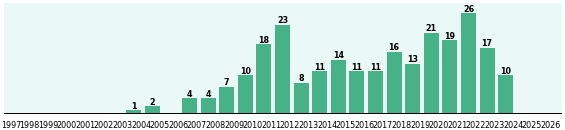
Information of the patient in this study:
- Age: 39
- Gender: female
What are the drugs?
- Baclofen has active ingredients of baclofen. It is often used in muscle spasms. eHealthMe is studying from 108,661 Baclofen users. Check the latest studies of Baclofen.
- Gabapentin has active ingredients of gabapentin. It is often used in peripheral neuropathy. eHealthMe is studying from 322,975 Gabapentin users. Check the latest studies of Gabapentin.
- Plaquenil has active ingredients of hydroxychloroquine sulfate. It is often used in systemic lupus erythematosus. eHealthMe is studying from 91,017 Plaquenil users. Check the latest studies of Plaquenil.
- Bayer low dose aspirin (81mg aspirin) has active ingredients of aspirin. It is often used in blood clots. eHealthMe is studying from 400 Bayer low dose aspirin (81mg aspirin) users. Check the latest studies of Bayer low dose aspirin (81mg aspirin).
What are the conditions?
- Sjogren syndrome (a disease that causes dryness in the mouth and eyes) is found to be associated with 621 drugs and 964 conditions by eHealthMe. Check the latest studies of Sjogren syndrome.
- Fibromyalgia (a long-term condition which causes pain all over the body) is found to be associated with 1,333 drugs and 1,832 conditions by eHealthMe. Check the latest studies of Fibromyalgia.
- Raynaud's disease is found to be associated with 1,074 drugs and 1,029 conditions by eHealthMe. Check the latest studies of Raynaud's disease.
- Sjogren's is found to be associated with 707 drugs and 962 conditions by eHealthMe. Check the latest studies of Sjogren's.
What are the adverse effects?
- Hypoglycaemia aggravated (deficiency of glucose in the bloodstream) is found to be associated with 1,479 drugs and 529 conditions by eHealthMe. Check the latest studies of Hypoglycaemia aggravated.
Comparison with patient's specific adverse outcomes:
You can check what is more associated with an adverse outcome: a drug mix, a drug, a condition, or a population of certain gender and age. Each patient is different. It is not uncommon that the results can be inconclusive or insignificant.
By the same drug(s):
-
Hypoglycaemia Aggravated (deficiency of glucose in the bloodstream):
- among females aged 39 (±5) who take the same drugs: 0% (0 of 246)
- among people who take the same drugs, regardless of gender or age: 0% (0 of 6,613)
By each condition:
-
people who have Hypoglycaemia Aggravated with Sjogren Syndrome:
- among females aged 39 (±5) who have Sjogren Syndrome: 1.76% (7 of 397)
- among people who have Sjogren Syndrome, regardless of gender or age: 0.23% (13 of 5,700) -
people who have Hypoglycaemia Aggravated with Fibromyalgia:
- among females aged 39 (±5) who have Fibromyalgia: 0.25% (13 of 5,165)
- among people who have Fibromyalgia, regardless of gender or age: 0.15% (87 of 57,409) -
people who have Hypoglycaemia Aggravated with Raynaud's Disease:
- among females aged 39 (±5) who have Raynaud's Disease: 0% (0 of 204)
- among people who have Raynaud's Disease, regardless of gender or age: 0% (0 of 2,111) -
people who have Hypoglycaemia Aggravated with Sjogren's:
- among females aged 39 (±5) who have Sjogren's: 1.76% (7 of 397)
- among people who have Sjogren's, regardless of gender or age: 0.23% (13 of 5,700)
By each drug (FDA data only):
-
people who take Plaquenil and have Hypoglycaemia Aggravated:
- among females aged 39 (±5) who take Plaquenil and have side effects: 0.14% (12 of 8,386)
- among people who take Plaquenil and have side effects, regardless of gender or age: 0.24% (216 of 88,375) -
people who take Baclofen and have Hypoglycaemia Aggravated:
- among females aged 39 (±5) who take Baclofen and have side effects: 0.33% (28 of 8,388)
- among people who take Baclofen and have side effects, regardless of gender or age: 0.19% (201 of 106,113) -
people who take Bayer Low Dose Aspirin (81mg Aspirin) and have Hypoglycaemia Aggravated:
- among females aged 39 (±5) who take Bayer Low Dose Aspirin (81mg Aspirin) and have side effects: 0% (0 of 0)
- among people who take Bayer Low Dose Aspirin (81mg Aspirin) and have side effects, regardless of gender or age: 0% (0 of 0) -
people who take Gabapentin and have Hypoglycaemia Aggravated:
- among females aged 39 (±5) who take Gabapentin and have side effects: 0.26% (40 of 15,228)
- among people who take Gabapentin and have side effects, regardless of gender or age: 0.34% (1,062 of 313,472)
Common drug interactions *:
- Headache (pain in head): 56 people, 22.76%
- Fatigue (feeling of tiredness): 43 people, 17.48%
- Nausea (feeling of having an urge to vomit): 38 people, 15.45%
- Hypoaesthesia (reduced sense of touch or sensation): 35 people, 14.23%
- High Blood Pressure : 34 people, 13.82%
- Chest Pain : 32 people, 13.01%
- Nausea And Vomiting : 31 people, 12.60%
- Fall : 28 people, 11.38%
- Dizziness : 27 people, 10.98%
- Stress And Anxiety : 26 people, 10.57%
- Dyspnea (difficult or laboured breathing): 25 people, 10.16%
- Drug Ineffective : 24 people, 9.76%
- Itching : 23 people, 9.35%
- Weight Increased : 23 people, 9.35%
- Urinary Tract Infection : 22 people, 8.94%
- Acute Kidney Failure : 21 people, 8.54%
- Sinusitis (inflammation of sinus): 20 people, 8.13%
- Joint Pain : 20 people, 8.13%
- Oedema Peripheral (superficial swelling): 18 people, 7.32%
- Diarrhea : 18 people, 7.32%
Common co-existing conditions *:
You may use this to check any potential undetected conditions.
- Narcolepsy (brain's inability to regulate sleep-wake cycles normally): 16 people, 6.50%
- Immunodeficiency Common Variable : 14 people, 5.69%
- Gastroesophageal Reflux Disease (a condition in which stomach contents leak backward from the stomach into the oesophagus): 14 people, 5.69%
- Cataplexy (loss of muscle tone accompanied by full conscious awareness): 13 people, 5.28%
- Depression : 11 people, 4.47%
- Arthritis (form of joint disorder that involves inflammation of one or more joints): 11 people, 4.47%
- Relapsing-Remitting Multiple Sclerosis (reoccurrence of an inflammatory disease in which the insulating covers of nerve cells in the brain and spinal cord are damaged): 10 people, 4.07%
- Stress And Anxiety : 9 people, 3.66%
- High Blood Pressure : 9 people, 3.66%
- Primary Pulmonary Hypertension (primary high blood pressure that affects the arteries in the lungs and the right side of your heart): 8 people, 3.25%
- Nausea (feeling of having an urge to vomit): 8 people, 3.25%
- Sleep Disorder : 8 people, 3.25%
- High Blood Cholesterol : 8 people, 3.25%
- Migraine (headache): 7 people, 2.85%
- Back Pain : 7 people, 2.85%
- Psoriatic Arthropathy (inflammation of the skin and joints with kin condition which typically causes patches (plaques) of red, scaly skin to develop): 6 people, 2.44%
- Gait Disturbance : 6 people, 2.44%
- Seizures (abnormal excessive or synchronous neuronal activity in the brain): 5 people, 2.03%
- Hypothyroidism (abnormally low activity of the thyroid gland, resulting in retardation of growth and mental development): 4 people, 1.63%
- Insomnia (sleeplessness): 4 people, 1.63%
Common co-used drugs *:
You may use this to check any potential interacting drugs.
- Cymbalta (49 people, 19.92%)
- Vitamin D3 (42 people, 17.07%)
- Zofran (36 people, 14.63%)
- Zoloft (33 people, 13.41%)
- Acetaminophen (32 people, 13.01%)
- Vitamin D (31 people, 12.60%)
- Prednisone (30 people, 12.20%)
- Clonazepam (29 people, 11.79%)
- Synthroid (29 people, 11.79%)
- Xanax (28 people, 11.38%)
- Nexium (28 people, 11.38%)
- Topamax (28 people, 11.38%)
- Proair Hfa (28 people, 11.38%)
- Protonix (28 people, 11.38%)
- Singulair (27 people, 10.98%)
- Pepcid (27 people, 10.98%)
- Calcium (26 people, 10.57%)
- Celebrex (25 people, 10.16%)
- Ambien (24 people, 9.76%)
- Methotrexate (24 people, 9.76%)
Drug effectiveness *:
Baclofen:
- not at all: 0 %
- somewhat: 100 %
- moderate: 0 %
- high: 0 %
- very high: 0 %
Gabapentin:
- not at all: 0 %
- somewhat: 100 %
- moderate: 0 %
- high: 0 %
- very high: 0 %
Plaquenil:
n/a
Bayer Low Dose Aspirin (81mg Aspirin):
- not at all: 0 %
- somewhat: 100 %
- moderate: 0 %
- high: 0 %
- very high: 0 %
* Some reports may have incomplete information.
How to use the study?
DO NOT STOP MEDICATIONS without first consulting your doctor. If there are any serious or long term adverse effects discovered in the study, discuss the study with your doctor to ensure that proper medication management will be in place if applicable.
Related studies
Drug side effects in long term, by gender and age:
- Baclofen: 108,661 reports
- Bayer low dose aspirin (81mg aspirin): 400 reports
- Gabapentin: 322,975 reports
- Plaquenil: 91,017 reports
Treatments, associated medications and conditions:
- Fibromyalgia: 92,984 reports
- Hypoglycaemia aggravated: 12 reports
- Raynaud's disease: 9,182 reports
- Sjogren syndrome: 12,487 reports
- Sjogren's: 12,487 reports
Drug side effects:
- Baclofen and Hypoglycaemia aggravated (201 reports)
- Gabapentin and Hypoglycaemia aggravated (1,062 reports)
- Plaquenil and Hypoglycaemia aggravated (216 reports)
- Bayer low dose aspirin (81mg aspirin) and Hypoglycaemia aggravated
Drug interactions:
- Baclofen and Gabapentin drug interaction (21,286 reports)
- Baclofen and Plaquenil drug interaction (851 reports)
- Baclofen and Bayer low dose aspirin (81mg aspirin) drug interaction
- Gabapentin and Plaquenil drug interaction (3,901 reports)
- Gabapentin and Bayer low dose aspirin (81mg aspirin) drug interaction
- Plaquenil and Bayer low dose aspirin (81mg aspirin) drug interaction
Symptoms:
- Sjogren syndrome and Hypoglycaemia aggravated
- Fibromyalgia and Hypoglycaemia aggravated (87 reports)
- Raynaud's disease and Hypoglycaemia aggravated
- Sjogren's and Hypoglycaemia aggravated
Drugs that are associated with:
- Hypoglycaemia aggravated: 1,479 drugs
Conditions that are associated with:
- Hypoglycaemia aggravated: 529 conditions
How the phase IV clinical study uses the data?
The study is based on gender, age, active ingredients of any drugs used. Other drugs that have the same active ingredients (e.g. generic drugs) are considered. Dosage of drugs is not considered in the study.
Who is eHealthMe?
With medical big data and proven AI/ML algorithms, eHealthMe provides a platform for everyone to run phase IV clinical trials. We study millions of patients and 5,000 more each day. Results of our real-world drug study have been referenced on 800+ peer-reviewed medical publications, including The Lancet, Mayo Clinic Proceedings, and Nature. Our analysis results are available to researchers, health care professionals, patients (testimonials), and software developers (open API).
WARNING, DISCLAIMER, USE FOR PUBLICATION
WARNING: Please DO NOT STOP MEDICATIONS without first consulting a physician since doing so could be hazardous to your health.
DISCLAIMER: All material available on eHealthMe.com is for informational purposes only, and is not a substitute for medical advice, diagnosis, or treatment provided by a qualified healthcare provider. All information is observation-only. Our phase IV clinical studies alone cannot establish cause-effect relationship. Different individuals may respond to medication in different ways. Every effort has been made to ensure that all information is accurate, up-to-date, and complete, but no guarantee is made to that effect. The use of the eHealthMe site and its content is at your own risk.
If you use this eHealthMe study on publication, please acknowledge it with a citation: study title, URL, accessed date.
Recent studies on eHealthMe:
- Could Palonosetron Hydrochloride cause Thrombocytopenia? - 9 seconds ago
- Motion Sickness in Wellbutrin, how severe and when it was recovered? - 26 seconds ago
- Drug interactions of Penlac and Lyrica - a minute ago
- Ramipril vs. Blopress, side effect and effectiveness comparison - a minute ago
- Could Diclofenac cause Hyperventilation? - a minute ago
- Could Ibu cause Infusion Site Oedema? - 2 minutes ago
- Drug interactions of Travatan and Vioxx - 3 minutes ago
- Could Metolazone cause Tardive Dyskinesia? - 3 minutes ago
- Could Lupron Depot cause Injection Site Abscess? - 3 minutes ago
- Could Ritalin cause Urticaria? - 3 minutes ago