Ceclor and Ibuprofen drug interactions - a phase IV clinical study of FDA data
Summary:
Drug interactions are reported among people who take Ceclor (cefaclor) and Ibuprofen (ibuprofen). Common drug interactions include muscle cramp among females and chronic kidney disease among males.
The phase IV clinical study analyzes what interactions people have when they take Ceclor and Ibuprofen. It is created by eHealthMe based on reports of 48 people who take the same drugs from the FDA, and is updated regularly.
What is Ceclor?
Ceclor has active ingredients of cefaclor. It is often used in sinusitis. eHealthMe is studying from 1,673 Ceclor users. Check the latest studies of Ceclor.
What is Ibuprofen?
Ibuprofen has active ingredients of ibuprofen. It is often used in pain. eHealthMe is studying from 245,270 Ibuprofen users. Check the latest studies of Ibuprofen.
48 people who take Ceclor and Ibuprofen together, and have interactions are studied.
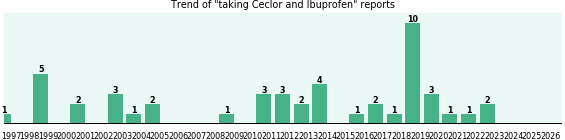
What are the common drug interactions of Ceclor and Ibuprofen, by gender? *:
female:
- Muscle cramp (painful sensation caused by muscle contraction)
- Muscle spasms (muscle contraction)
- Plantar fasciitis (painful inflammatory process of the plantar fascia)
- Pyrexia (fever)
- Rash
- Rigors (an episode of shaking or exaggerated shivering)
- Wound dehiscence (a surgical incision reopens either internally or externally)
- Anger
- Apathy
- Atrial fibrillation (fibrillation of the muscles of the atria of the heart)
male:
- Chronic kidney disease
- Renal failure (kidney dysfunction)
- Groin abscess (pus in groin)
- Necrotising fasciitis (an uncommon life-threatening soft-tissue infection)
- Nerve injury
- Pelvic abscess
- Perineal abscess
- Perirectal abscess
- Peritoneal abscess
- Rectal abscess (pus in rectum)
What are the common drug interactions of Ceclor and Ibuprofen, by age (0-1 to 60+)? *:
0-1:
- Erythema multiforme (a type of hypersensitivity reaction)
- Swelling face
2-9:
- Arthritis (form of joint disorder that involves inflammation of one or more joints)
- Bronchitis (inflammation of the mucous membrane in the bronchial tubes)
- Laryngeal oedema (swelling of larynx)
- Pulmonary oedema (fluid accumulation in the lungs)
- Rash erythematous (redness of the skin)
- Respiratory failure (excl neonatal) (inadequate gas exchange by the respiratory system(excluding neonatal))
- Urticaria (rash of round, red welts on the skin that itch intensely)
10-19:
- Cholecystitis acute (rapid infection of gallbladder)
- Injury
- Drug hypersensitivity
- Rash
- Swelling
20-29:
n/a
30-39:
- Amnesia (deficit in memory caused by brain damage, disease, or psychological trauma)
- Drug dependence
- Exacerbation of anxiety (increase in the severity of anxiety)
- Anger
- Drug effect decreased
- Sedation
- Aggression
- Cystocele (a condition that occurs when the tough fibrous wall between a woman's bladder and her vagina is torn by childbirth)
- Depression
- Electrolyte imbalance
40-49:
- Asthma
- Breast cyst
- Confusional state
- Cystocele (a condition that occurs when the tough fibrous wall between a woman's bladder and her vagina is torn by childbirth)
- Disturbance in attention
- Dizziness
- Drug withdrawal syndrome (interfere with normal social, occupational, or other functioning. are not due to another medical condition, drug use, or discontinuation)
- Dry mouth
- Dysphonia (speech disorder attributable to a disorder of phonation)
- Dyspnoea (difficult or laboured respiration)
50-59:
- Drug hypersensitivity
- Drug intolerance (drug sensitivity)
- Dyspnoea (difficult or laboured respiration)
- Wheezing (a high-pitched whistling sound made while you breath)
60+:
- Drug hypersensitivity
- Chronic kidney disease
- Balance disorder
- Bradycardia (abnormally slow heart action)
- Cholelithiasis (the presence or formation of gallstones in the gallbladder or bile ducts)
- Hypertension (high blood pressure)
- Hypoacusis (loss of hearing)
- Hypotension (abnormally low blood pressure)
- Hypothyroidism (abnormally low activity of the thyroid gland, resulting in retardation of growth and mental development)
- International normalised ratio increased
What are the existing conditions these people have? *
- Gastroesophageal Reflux Disease (a condition in which stomach contents leak backward from the stomach into the oesophagus): 10 people, 20.83%
- Upper Respiratory Tract Infection: 4 people, 8.33%
- Agitation (state of anxiety or nervous excitement): 4 people, 8.33%
- Stable Angina (a constant chest pain): 3 people, 6.25%
- Migraine (headache): 3 people, 6.25%
- Inflammation: 3 people, 6.25%
- Infection: 3 people, 6.25%
- High Blood Pressure: 3 people, 6.25%
- High Blood Cholesterol: 3 people, 6.25%
- Headache (pain in head): 3 people, 6.25%
* Approximation only. Some reports may have incomplete information.
Do you take Ceclor and Ibuprofen?
- Personalize this study to your gender, age, symptoms and drugs
- Predict drug outcomes for up to one year with AI
- Get an AI agent to monitor your drugs continuously
Related studies:
Effectiveness of, side effects of, and alternative drugs to the 2 drugs:
Browse all drug interactions of Ceclor and Ibuprofen:
a b c d e f g h i j k l m n o p q r s t u v w x y zSub-studies by gender and age:
Female: 0-1 2-9 10-19 20-29 30-39 40-49 50-59 60+
Male: 0-1 2-9 10-19 20-29 30-39 40-49 50-59 60+
Browse all side effects of Ceclor:
a b c d e f g h i j k l m n o p q r s t u v w x y zBrowse all side effects of Ibuprofen:
a b c d e f g h i j k l m n o p q r s t u v w x y zBrowse all interactions between Ceclor and drugs from A to Z:
a b c d e f g h i j k l m n o p q r s t u v w x y zBrowse all interactions between Ibuprofen and drugs from A to Z:
a b c d e f g h i j k l m n o p q r s t u v w x y zRelated publications that referenced our studies
- Moslim MA, Sodeman TC, Nawras AT, "A Case of Suggested Ibuprofen-Induced Acute Pancreatitis", American journal of therapeutics, 2016 Nov .
- Moslim MA, Sodeman TC, Nawras AT, "A Case of Suggested Ibuprofen-Induced Acute Pancreatitis", American journal of therapeutics, 2016 Nov .
How the study uses the data?
The study uses data from the FDA. It is based on cefaclor and ibuprofen (the active ingredients of Ceclor and Ibuprofen, respectively), and Ceclor and Ibuprofen (the brand names). Other drugs that have the same active ingredients (e.g. generic drugs) are not considered. Dosage of drugs is not considered in the study.
How to use the study?
DO NOT STOP MEDICATIONS without first consulting your doctor. If there are any serious or long term adverse effects discovered in the study, discuss the study with your doctor to ensure that proper medication management will be in place if applicable.
Who is eHealthMe?
With medical big data and proven AI/ML algorithms, eHealthMe provides a platform for everyone to run phase IV clinical trials. We study millions of patients and 5,000 more each day. Results of our real-world drug study have been referenced on 800+ peer-reviewed medical publications, including The Lancet, Mayo Clinic Proceedings, and Nature. Our analysis results are available to researchers, health care professionals, patients (testimonials), and software developers (open API).
WARNING, DISCLAIMER, USE FOR PUBLICATION
WARNING: Please DO NOT STOP MEDICATIONS without first consulting a physician since doing so could be hazardous to your health.
DISCLAIMER: All material available on eHealthMe.com is for informational purposes only, and is not a substitute for medical advice, diagnosis, or treatment provided by a qualified healthcare provider. All information is observation-only. Our phase IV clinical studies alone cannot establish cause-effect relationship. Different individuals may respond to medication in different ways. Every effort has been made to ensure that all information is accurate, up-to-date, and complete, but no guarantee is made to that effect. The use of the eHealthMe site and its content is at your own risk.
If you use this eHealthMe study on publication, please acknowledge it with a citation: study title, URL, accessed date.
Recent studies on eHealthMe:
- Drug interactions of Heparin and Dotarem - 3 seconds ago
- Could Adcal cause Hypoglycemia? - 8 seconds ago
- Could Miralax cause Hyporeflexia? - 12 seconds ago
- Albuterol vs. Singulair, side effect and effectiveness comparison - 17 seconds ago
- Could Codeine Sulfate cause Restless Leg Syndrome? - 34 seconds ago
- Could Detrol cause Parkinson'S Disease? - 38 seconds ago
- Drug interactions of Clonidine Hydrochloride and Dexamethasone - 50 seconds ago
- Cognitive Disorder and Pollakiuria - a minute ago
- Could Ditropan Xl cause Pneumonia Aspiration? - a minute ago
- Could Olanzapine cause Macrocytosis? - 2 minutes ago