Concerta and Turmeric drug interactions - a phase IV clinical study of FDA data
Summary:
Drug interactions are reported among people who take Concerta (methylphenidate hydrochloride) and Turmeric (turmeric). Common drug interactions include headache among females and benign prostatic hyperplasia among males.
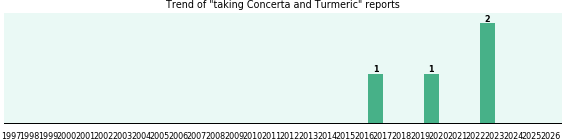
The phase IV clinical study analyzes what interactions people have when they take Concerta and Turmeric. It is created by eHealthMe based on reports of 41 people who take the same drugs from the FDA, and is updated regularly.
What is Concerta?
Concerta has active ingredients of methylphenidate hydrochloride. It is often used in attention deficit hyperactivity disorder. eHealthMe is studying from 25,040 Concerta users. Check the latest studies of Concerta.
What is Turmeric?
Turmeric has active ingredients of turmeric. It is often used in inflammation. eHealthMe is studying from 16,563 Turmeric users. Check the latest studies of Turmeric.
41 people who take Concerta and Turmeric together, and have interactions are studied.
What are the common drug interactions of Concerta and Turmeric, by gender? *:
female:
- Headache (pain in head)
- Decreased appetite
- Fatigue (feeling of tiredness)
- Hypotension (abnormally low blood pressure)
- Malaise (a feeling of general discomfort or uneasiness)
- Nausea (feeling of having an urge to vomit)
- Weight decreased
- Disability
- Blood pressure diastolic decreased
- Body temperature increased
male:
- Benign prostatic hyperplasia (benign enlargement of the prostate)
- Deafness
- Headache (pain in head)
- Hot flush (sudden feelings of heat)
- Hypoaesthesia (reduced sense of touch or sensation)
- Intermittent claudication
- Nausea (feeling of having an urge to vomit)
- Paraesthesia (sensation of tingling, tickling, prickling, pricking, or burning of a person's skin with no apparent long-term physical effect)
- Tooth infection
- Abdominal pain
What are the common drug interactions of Concerta and Turmeric, by age (0-1 to 60+)? *:
0-1:
n/a
2-9:
n/a
10-19:
n/a
20-29:
- Fatigue (feeling of tiredness)
- Headache (pain in head)
- Hypotension (abnormally low blood pressure)
- Myalgia (muscle pain)
- Nausea (feeling of having an urge to vomit)
- Presyncope
- Pyrexia (fever)
30-39:
- Dehydration (dryness resulting from the removal of water)
- Drug ineffective
- Fall
- Fatigue (feeling of tiredness)
- Fibromyalgia (a long-term condition which causes pain all over the body)
- Hallucination (an experience involving the perception of something not present)
- Herpes simplex (herpes simplex is a common viral infection)
- Hyperhidrosis (abnormally increased sweating)
- Hypertension (high blood pressure)
- Influenza like illness
40-49:
- Back pain
- Nausea (feeling of having an urge to vomit)
- Abdominal pain
- Alopecia (absence of hair from areas of the body)
- Arthralgia (joint pain)
- Asthenia (weakness)
- Bedridden
- Blister (small pocket of fluid within the upper layers of the skin caused by forceful rubbing (friction), burning, freezing, chemical exposure)
- Blood lactic acid increased
- Blood pressure increased
50-59:
- Fluid retention (an abnormal accumulation of fluid in the blood)
- Insomnia (sleeplessness)
- Joint swelling
- Oedema (fluid collection in tissue)
- Oropharyngeal pain
- Peripheral swelling
- Renal cyst (kidney cyst)
- Tendon disorder (disease of tendon)
- Tinnitus (a ringing in the ears)
- Tremor (trembling or shaking movements in one or more parts of your body)
60+:
- Abdominal discomfort
- Dizziness
- Insomnia (sleeplessness)
What are the existing conditions these people have? *
- Narcolepsy (brain's inability to regulate sleep-wake cycles normally): 13 people, 31.71%
- Muscle Tightness: 11 people, 26.83%
- Headache (pain in head): 11 people, 26.83%
- Central Nervous System Inflammation (infection of brain or spinal cord): 11 people, 26.83%
- Drowsiness: 9 people, 21.95%
- Cataplexy (loss of muscle tone accompanied by full conscious awareness): 9 people, 21.95%
- Pain: 5 people, 12.20%
- Ankylosing Spondylitis (type of arthritis affecting the spine): 5 people, 12.20%
- Stress And Anxiety: 3 people, 7.32%
* Approximation only. Some reports may have incomplete information.
Do you take Concerta and Turmeric?
- Personalize this study to your gender, age, symptoms and drugs
- Predict drug outcomes for up to one year with AI
- Get an AI agent to monitor your drugs continuously
Related studies:
Effectiveness of, side effects of, and alternative drugs to the 2 drugs:
Browse all drug interactions of Concerta and Turmeric:
a b c d e f g h i j k l m n o p q r s t u v w x y zSub-studies by gender and age:
Female: 0-1 2-9 10-19 20-29 30-39 40-49 50-59 60+
Male: 0-1 2-9 10-19 20-29 30-39 40-49 50-59 60+
Browse all side effects of Concerta:
a b c d e f g h i j k l m n o p q r s t u v w x y zBrowse all side effects of Turmeric:
a b c d e f g h i j k l m n o p q r s t u v w x y zBrowse all interactions between Concerta and drugs from A to Z:
a b c d e f g h i j k l m n o p q r s t u v w x y zBrowse all interactions between Turmeric and drugs from A to Z:
a b c d e f g h i j k l m n o p q r s t u v w x y zRelated publications that referenced our studies
- Coskun M, Adak I, "Excessive and frequent menstrual bleeding with methylphenidate in an adolescent girl with attention-deficit hyperactivity disorder", Journal of clinical psychopharmacology, 2017 Oct .
- Yektas ?, Samurcu ND, Tufan AE, "Loss of Eyebrows (Madarosis) After Use of Long-Acting Methylphenidate: Case Report", Journal of Clinical Psychopharmacology, 2017 Aug .
- Ersoy MA, Ersoy HT, "Manic symptoms associated with isotretinoin and methylphenidate combination: a case report", Klinik Psikofarmakoloji Bülteni-Bulletin of Clinical Psychopharmacology, 2014 Sep .
- Coskun M, Adak I, Akaltun I, "Bilateral gynecomastia in a preadolescent boy while under treatment with methylphenidate and paroxetine", Journal of clinical psychopharmacology, 2014 Aug .
- Adak, I., & Coskun, M. , "Symptomatic cholelithiasis associated with combined use of methylphenidate and fluoxetine in an otherwise healthy adolescent girl", Psychiatry and Clinical Psychopharmacology, 2014 Jan .
- Coskun, M., & Adak, I. , "Excessive and frequent menstrual bleeding with methylphenidate in an adolescent girl with attention-deficit hyperactivity disorder", Journal of clinical psychopharmacology, 2014 Jan .
- Yalcin O, Aslan AA, Sari BA, Turkbay T, "Possible methylphenidate related hoarseness and disturbances of voice quality: two pediatric cases", Klinik Psikofarmakoloji Bülteni-Bulletin of Clinical Psychopharmacology, 2012 Sep .
- Lufi D, Bucherman M, Akita M, Cohen R, Sibani C, "The effect of methylphenidate on speech patterns of children with attention deficit disorder", Journal of Behavioral Health, 2012 Jan .
- Coskun M, Adak I, "Excessive and frequent menstrual bleeding with methylphenidate in an adolescent girl with attention-deficit hyperactivity disorder", Journal of clinical psychopharmacology, 2017 Oct .
- Yektas ?, Samurcu ND, Tufan AE, "Loss of Eyebrows (Madarosis) After Use of Long-Acting Methylphenidate: Case Report", Journal of Clinical Psychopharmacology, 2017 Aug .
- Ersoy MA, Ersoy HT, "Manic symptoms associated with isotretinoin and methylphenidate combination: a case report", Klinik Psikofarmakoloji Bülteni-Bulletin of Clinical Psychopharmacology, 2014 Sep .
- Coskun M, Adak I, Akaltun I, "Bilateral gynecomastia in a preadolescent boy while under treatment with methylphenidate and paroxetine", Journal of clinical psychopharmacology, 2014 Aug .
- Adak, I., & Coskun, M. , "Symptomatic cholelithiasis associated with combined use of methylphenidate and fluoxetine in an otherwise healthy adolescent girl", Psychiatry and Clinical Psychopharmacology, 2014 Jan .
- Coskun, M., & Adak, I. , "Excessive and frequent menstrual bleeding with methylphenidate in an adolescent girl with attention-deficit hyperactivity disorder", Journal of clinical psychopharmacology, 2014 Jan .
- Yalcin O, Aslan AA, Sari BA, Turkbay T, "Possible methylphenidate related hoarseness and disturbances of voice quality: two pediatric cases", Klinik Psikofarmakoloji Bülteni-Bulletin of Clinical Psychopharmacology, 2012 Sep .
- Lufi D, Bucherman M, Akita M, Cohen R, Sibani C, "The effect of methylphenidate on speech patterns of children with attention deficit disorder", Journal of Behavioral Health, 2012 Jan .
How the study uses the data?
The study uses data from the FDA. It is based on methylphenidate hydrochloride and turmeric (the active ingredients of Concerta and Turmeric, respectively), and Concerta and Turmeric (the brand names). Other drugs that have the same active ingredients (e.g. generic drugs) are not considered. Dosage of drugs is not considered in the study.
How to use the study?
DO NOT STOP MEDICATIONS without first consulting your doctor. If there are any serious or long term adverse effects discovered in the study, discuss the study with your doctor to ensure that proper medication management will be in place if applicable.
Who is eHealthMe?
With medical big data and proven AI/ML algorithms, eHealthMe provides a platform for everyone to run phase IV clinical trials. We study millions of patients and 5,000 more each day. Results of our real-world drug study have been referenced on 800+ peer-reviewed medical publications, including The Lancet, Mayo Clinic Proceedings, and Nature. Our analysis results are available to researchers, health care professionals, patients (testimonials), and software developers (open API).
WARNING, DISCLAIMER, USE FOR PUBLICATION
WARNING: Please DO NOT STOP MEDICATIONS without first consulting a physician since doing so could be hazardous to your health.
DISCLAIMER: All material available on eHealthMe.com is for informational purposes only, and is not a substitute for medical advice, diagnosis, or treatment provided by a qualified healthcare provider. All information is observation-only. Our phase IV clinical studies alone cannot establish cause-effect relationship. Different individuals may respond to medication in different ways. Every effort has been made to ensure that all information is accurate, up-to-date, and complete, but no guarantee is made to that effect. The use of the eHealthMe site and its content is at your own risk.
If you use this eHealthMe study on publication, please acknowledge it with a citation: study title, URL, accessed date.
Recent studies on eHealthMe:
- Clarinex D 24 Hour vs. Symbicort, side effect and effectiveness comparison - 7 seconds ago
- Drug interactions of Astepro and Aldactone - 13 seconds ago
- Losartan Potassium vs. Alprazolam, side effect and effectiveness comparison - 14 seconds ago
- Could Metformin Hydrochloride cause Hypoglycaemic Encephalopathy? - 14 seconds ago
- Could Vagifem cause Vomiting Aggravated? - 14 seconds ago
- Hypericum Perforatum vs. Olanzapine, side effect and effectiveness comparison - 20 seconds ago
- Drug interactions of Latanoprost and Colace - 21 seconds ago
- Vaginal Bleeding Between Periods and Device Expulsion - 22 seconds ago
- Drug interactions of Nitrofurantoin and Indapamide - 22 seconds ago
- Could Acetaminophen And Hydrocodone Bitartrate cause Diabetes Mellitus Inadequate Control? - 23 seconds ago